Operators entering the micromobility space today face one major early decision: which vehicles to deploy. Your fleet type affects user experience, operational costs, maintenance needs, and regulatory compliance. Whether you plan to launch e‑scooters, e‑bikes, mopeds, or a mixed fleet, each vehicle category serves a different purpose.
This guide covers the main micromobility fleet vehicles – bike, e‑bike, kick scooter, e‑scooter, moped, and e‑moped – along with their features, common manufacturers, docking options, and ideal use cases.
Understanding the Vehicle Types
Bike (mechanical bicycle) A standard pedal bicycle with no motor. In shared fleets, mechanical bikes are simple, durable, and cost‑efficient. They require minimal electronics and are ideal for cities with strong cycling infrastructure. They generate lower maintenance costs but depend entirely on rider effort. Normally, user demand for this type of bike is also lower, thus operators can expect lower RPV rate (rides per vehicle per day).
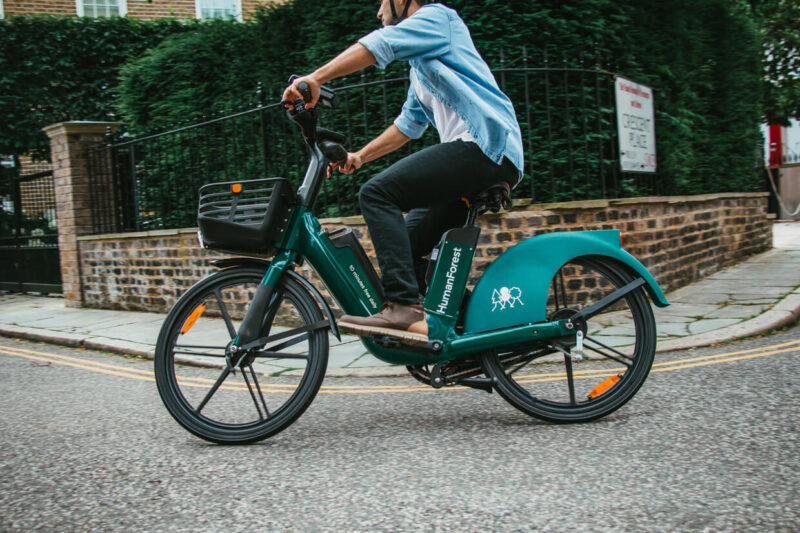
E‑bike (electric bicycle) An electric bike combines pedal power with an electric motor that assists the rider. E‑bikes allow longer trips, easier hill climbing, and broader user appeal. Typical shared e‑bike trips range between 5–10 km. They cost more upfront but often generate higher revenue per ride. Many fleet operators source models from manufacturers such as Segway‑Ninebot, Okai, and Yadea. You can explore available e‑bike hardware options on the ATOM Mobility vehicles page: https://www.atommobility.com/vehicles.
Kick scooter (non‑electric scooter) A kick scooter is manually powered by pushing off the ground. While less common in commercial shared fleets today, they are still used in some controlled campus or tourism environments where low speed and low complexity are priorities.
E‑scooter (electric scooter) E‑scooters are lightweight, battery‑powered vehicles designed for short urban trips, typically under 4 km. They are highly flexible and well suited for dense city centers and first‑mile/last‑mile transport. Modern fleet models include swappable batteries, improved braking systems, suspension upgrades, and integrated IoT modules. Popular manufacturers include Segway‑Ninebot, Okai, and Navee that can also be found at ATOM Mobility.
Moped (fuel‑powered light motorcycle) A moped is a small motorized vehicle traditionally powered by gasoline, offering higher speeds and longer range than bikes or scooters. In shared mobility, fuel mopeds are becoming less common due to emissions regulations but still operate in some regions.
E‑moped (electric moped) An e‑moped is an electric version of a traditional moped. It provides longer range and higher speed than e‑scooters, often up to 45 km/h depending on local regulations. E‑mopeds are ideal for suburban areas or cities with longer commuting distances. Manufacturers such as NIU, Silence, Super Soco, and Yadea dominate this segment.
The table below provides a general comparison of the most common shared mobility vehicle types, including typical purchase prices, expected service life in commercial fleets, and average utilization (rides per vehicle per day). Actual figures vary depending on manufacturer, market, operating conditions, and fleet maintenance.
Shared mobility fleet economics: purchase price, lifespan, and rides per vehicle per day, comparing bikes, e‑bikes, e‑scooters, and mopeds.
| Vehicle | Purchase price (new) | Purchase price (used) | Fleet lifespan | Rides per day (RPV) |
|---|---|---|---|---|
| Mechanical bike | €300–500 | €100–300 | 5–8 years | 1–3 |
| E-bike | €900–1,300 | €400–800 | 4–8 years | 2–5 |
| E-scooter | €500–1,200 | €200–600 | 3–8 years | 3–6 |
| Fuel moped | €1,500–2,500 | €700–2,000 | 4–7 years | 2–5 |
| E-moped | €1,800–2,500 | €700–1,500 | 4–7 years | 2–5 |
Approx. new purchase price – The typical cost of purchasing a new commercial-grade vehicle for a shared mobility fleet. Prices vary depending on the manufacturer, hardware specifications, battery capacity, IoT integration, and fleet order size.
Approx. used purchase price – The typical market price of a pre-owned commercial vehicle suitable for shared mobility operations. Factors such as vehicle age, mileage, battery health (for electric vehicles), overall condition, and refurbishment status significantly influence the price.
Typical fleet lifespan – The average period a vehicle remains economically viable in a shared mobility fleet before being retired or replaced. Lifespan depends on ride frequency, maintenance quality, weather conditions, road infrastructure, vandalism, accidents, and how intensively the fleet is operated.
Average rides/day/vehicle (RPV) – Rides Per Vehicle per Day (RPV) is one of the most important performance metrics for shared mobility operators. It measures the average number of completed trips each vehicle performs daily. Higher RPV generally leads to better fleet utilization, faster return on investment, and improved profitability. Actual RPV varies depending on vehicle type, city size, demand, seasonality, pricing strategy, fleet availability, and operational efficiency.
Docked vs Dockless Infrastructure
Beyond vehicle choice, parking strategy matters. Dockless fleets offer flexibility but may create parking compliance challenges. Docked systems use physical stations that improve order, security, and charging efficiency.
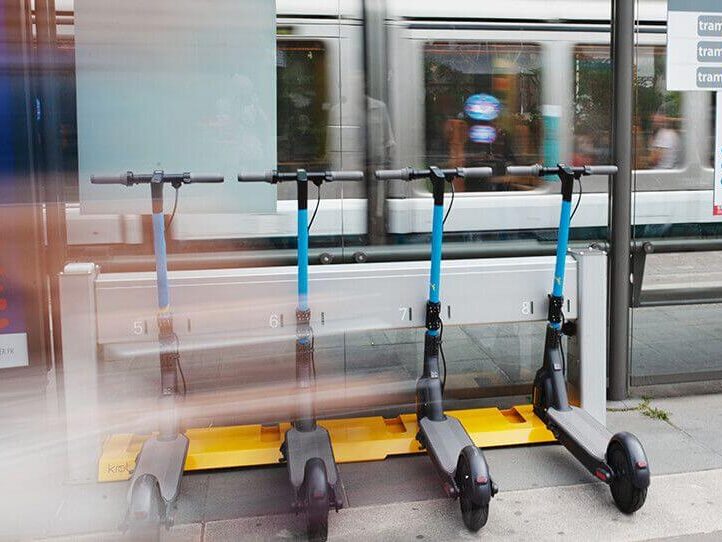
Several manufacturers specialize in docking and locking infrastructure, including KNOT CITY (which recently is out of market), and Kuhmute. These docking systems can improve vehicle organization, reduce vandalism, and simplify charging logistics for e‑bikes and e‑mopeds.
E-Scooters: Best for Dense Urban Zones
E‑scooters work best in compact city centers, student districts, and areas with high short‑trip demand. They require less parking space and are faster to deploy. However, they demand consistent maintenance and battery management.
E-Bikes: Broader Demographic Appeal
E‑bikes provide greater comfort and stability, making them suitable for older users, tourists, and riders carrying bags. They perform well in cities with established cycling lanes or moderate hills. Although more expensive than scooters, they often achieve longer ride durations and stronger customer loyalty.
E-Mopeds: Extended Range and Higher Revenue Potential
E‑mopeds are suitable for cities with wider geography or suburban commuting patterns. They typically deliver higher revenue per trip but require licensing compliance and more robust fleet management.
Matching Vehicles to City Profiles
Tourist cities often benefit from e‑bikes due to comfort and sightseeing suitability. College towns frequently lean toward e‑scooters because of affordability and convenience. Larger or hilly cities may support mixed fleets. Suburban zones often justify e‑mopeds for longer travel distances.
Climate also influences hardware decisions. Wet or cold regions require sealed wiring, water‑resistant components, and tires suitable for slippery conditions.
Planning Your Hardware Strategy
Choosing the right fleet is not only about vehicle type. It involves sourcing reliable manufacturers, evaluating docking options, understanding regulatory requirements, and planning maintenance cycles. Reviewing available hardware categories through ATOM Mobility’s vehicles directory can help operators compare models and integrations before committing to a large fleet purchase.
The most successful operators treat fleet composition as flexible. They start with one category and expand based on usage data, seasonality, and rider behavior. A balanced hardware strategy allows adaptation without replacing the entire fleet.
ATOM Mobility supports mixed fleets – including e‑scooters, e‑bikes, and e‑mopeds – within one platform, covering booking, payments, hardware integrations, and analytics. This allows operators to scale gradually while maintaining operational control.
Vehicle choice is not static. As cities evolve and regulations tighten, operators who understand their hardware options and adapt quickly are better positioned for long‑term growth.
This article was originally published by ATOM Mobility.