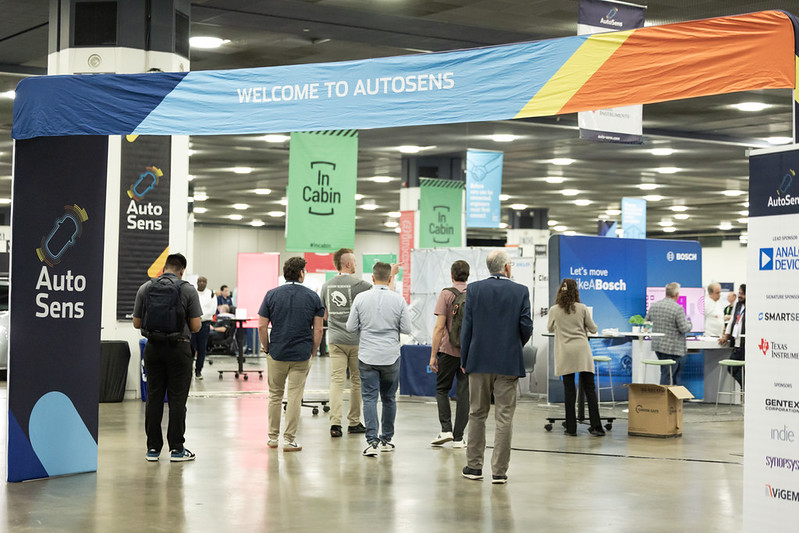
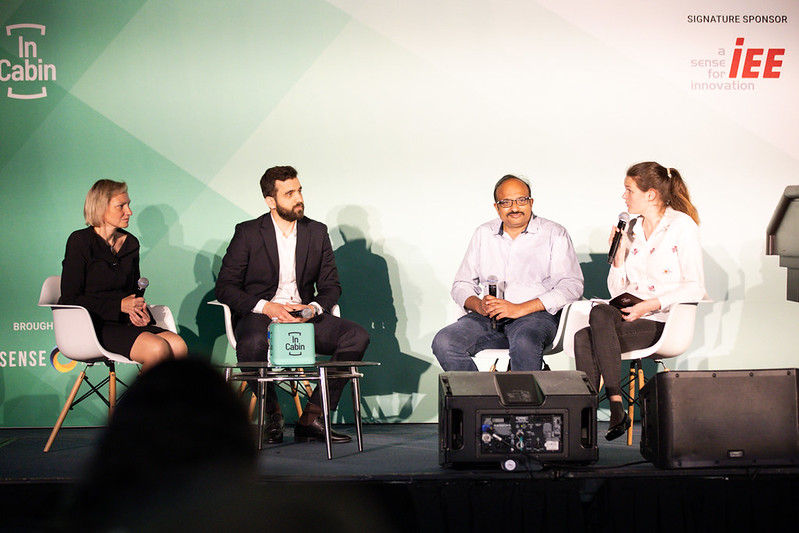
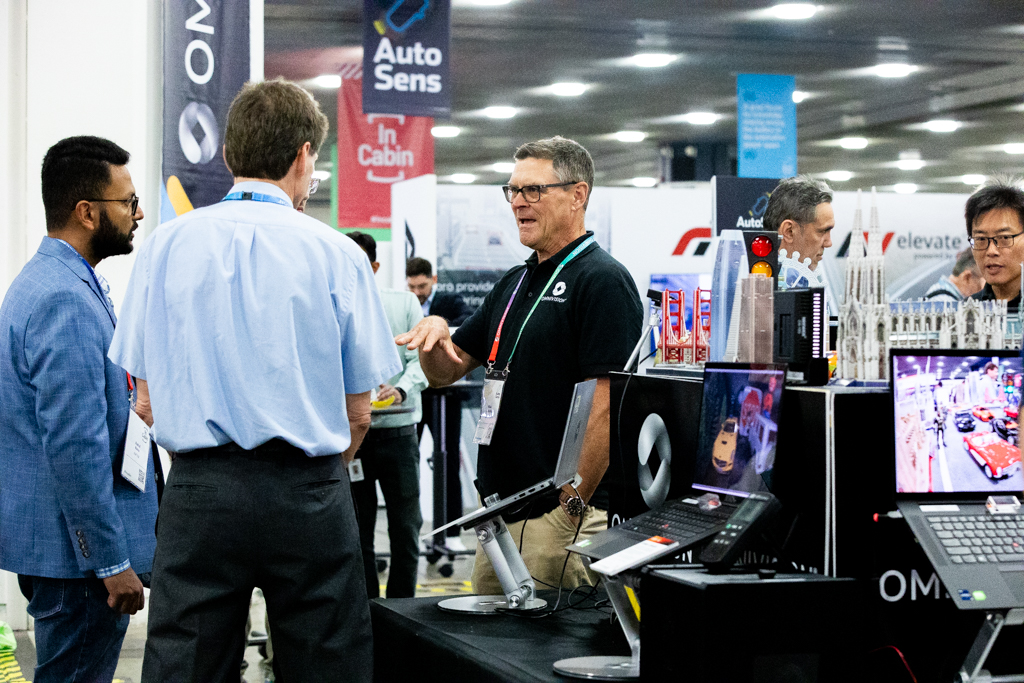
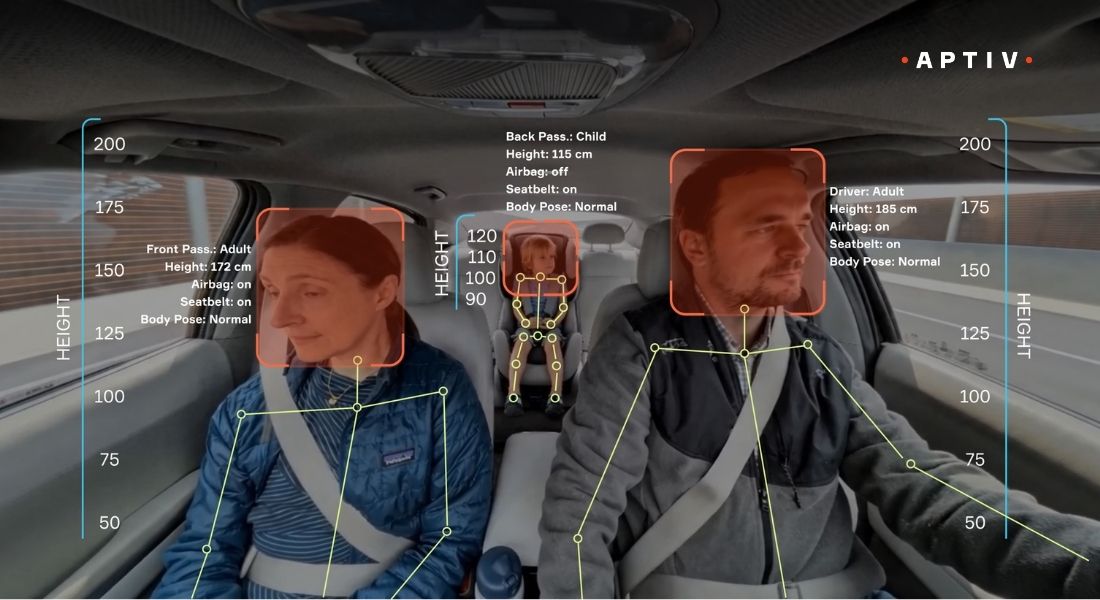
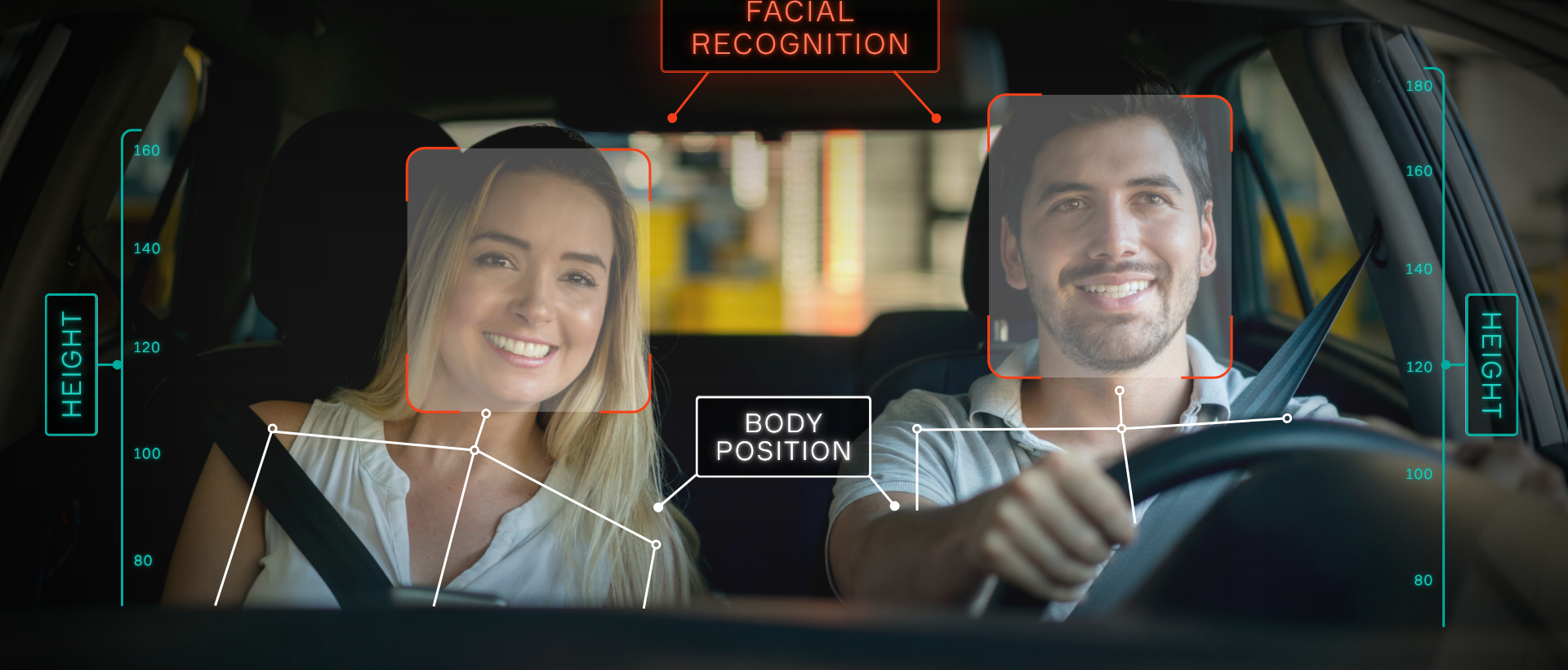
Last week in Barcelona, AutoSens and InCabin Europe 2026 brought together automotive technology companies showcasing developments in vehicle sensing and in-cabin monitoring.
Virtual Testing and Synthetic Data
Several announcements focused on the growing role of virtual testing in this space. For example, Anyverse showcased its Virtual Assessment Implementation Program (VAIP), bringing together OEMs and Tier 1 suppliers to work towards the virtual assessment framework planned by Euro NCAP for its 2029 protocols covering Driver Monitoring Systems (DMS), Occupant Monitoring Systems (OMS) and Child Presence Detection (CPD).
Meanwhile, simulation specialist rFpro presented AV elevate IN CABIN, a simulation package for developing and testing in-cabin monitoring systems. The system combines detailed virtual vehicle interiors with camera and radar sensor modelling, human behaviour simulation and Euro NCAP scenario testing.
Synthetic data was also a focus at the events. Aptiv highlighted its use in generating virtual scenarios for training and validation, particularly for situations that are difficult, expensive or unsafe to capture in the real world. The company stressed that synthetic data is intended to complement rather than replace physical testing, with real-world data remaining important for identifying bias and validating systems.

Sensors for Higher-Volume In-Cabin Monitoring
The event also saw developments aimed at making in-cabin sensing suitable for higher-volume vehicle programmes. STMicroelectronics showcased its recently launched ST SafeSense VD56GA, a 1.1-megapixel automotive image sensor designed for infrared driver and occupant monitoring. ST said the sensor delivers 35% higher image sharpness and nearly 60% higher quantum efficiency than its previous generation.
Alexandre Balmefrezol, Executive Vice President and General Manager of the Imaging Sub-Group at STMicroelectronics said:In-cabin sensing is moving beyond premium platforms, and carmakers need cost-effective solutions they can deploy broadly. With VD56GA, we focused on the system-level tradeoffs that matter most: image quality in infrared conditions, compact integration, and a cost structure that supports high-volume programs.
Thermal Imaging for Vehicle Perception
Thermal sensing was another area of focus at AutoSens. LYNRED launched its CAPT640, a 640 × 480 thermal imaging sensor designed for automotive applications, while Edge Foundry introduced its ThermoK VGA 640 × 480 detector. Edge Foundry said mass production is scheduled to begin in December 2026.
Both companies are targeting applications including night-time pedestrian detection and advanced driver assistance, using thermal sensing to detect people, cyclists, animals and other objects in conditions where visible-light cameras can face limitations.
Combining Cameras, Radar and Other Sensors
The event exhibitors also explored the fusion of different sensing technologies. Deep In Sight and Murata presented a proof of concept combining camera-based DMS and OMS with in-cabin radar to detect occupant presence, position, movement, state and behaviour. Deep In Sight also demonstrated remote photoplethysmography (rPPG), using camera images to estimate heart rate and other vital signals.
Furthermore, Calterah showcased a UWB-based Parking Assist System using its CAL1106AQ chip, alongside two new ADAS radar SoCs. The company said its UWB system uses IEEE 802.15.4ab sensing and is designed to detect low-profile objects and stationary obstacles.
Connectivity
As vehicle sensing becomes more complex, companies are likewise focusing on how the data is moved, processed and turned into useful vehicle functions.
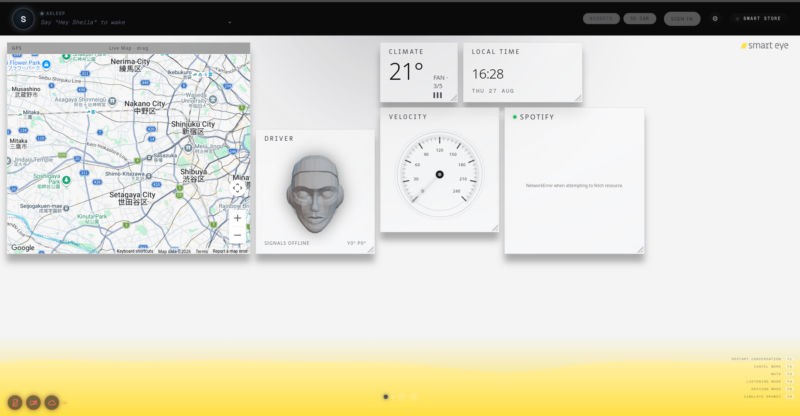
Smart Eye presented a multimodal automotive AI agent combining information about the driver with data from the vehicle and its surroundings. The demonstration uses inputs including gaze, attention, driver state and occupancy alongside vehicle and exterior sensing to interpret context and interact with vehicle functions.
In addition, KD demonstrated an automotive camera using optical fibre connectivity, with its KD7251 transceiver enabling the Leopard Imaging camera to use an IEEE 802.3cz-compliant 10GBASE-AU link. The system upgrades the camera from its previous copper GMSL2 interface to connectivity of up to 10 Gb/s, addressing the growing volume of data generated by higher-resolution automotive cameras.
What’s more, Solectrix presented SXIVE and proFRAME as a toolchain for automotive camera development, supporting sensor integration, image processing and image-quality evaluation across in-cabin and exterior perception applications. The combination reflects the increasing need to assess the complete imaging chain from sensor acquisition through to the processed image used by vehicle systems.
Industry Appointments
Notably, the people guiding these companies and their technology development play a big role in turning innovation into production programmes. Recognising the importance of personnel, Brighter Signals announced the planned appointment of Shanghai-based Automobility founder and CEO Bill Russo as an independent director, subject to shareholder approval. The company develops fabric-based sensing technology for automotive occupancy and seat-belt reminder applications, and Russo brings decades of automotive industry experience to its board.
The appointment reflects China’s growing importance to the company, not only as a manufacturing base but arguably as a source of feature innovation and technical standards increasingly shaping in-cabin requirements worldwide.
Together, the announcements at AutoSens and InCabin highlighted progress across sensing hardware, simulation, connectivity and software, as automotive suppliers work to bring increasingly capable in-cabin monitoring to a wider range of vehicles.