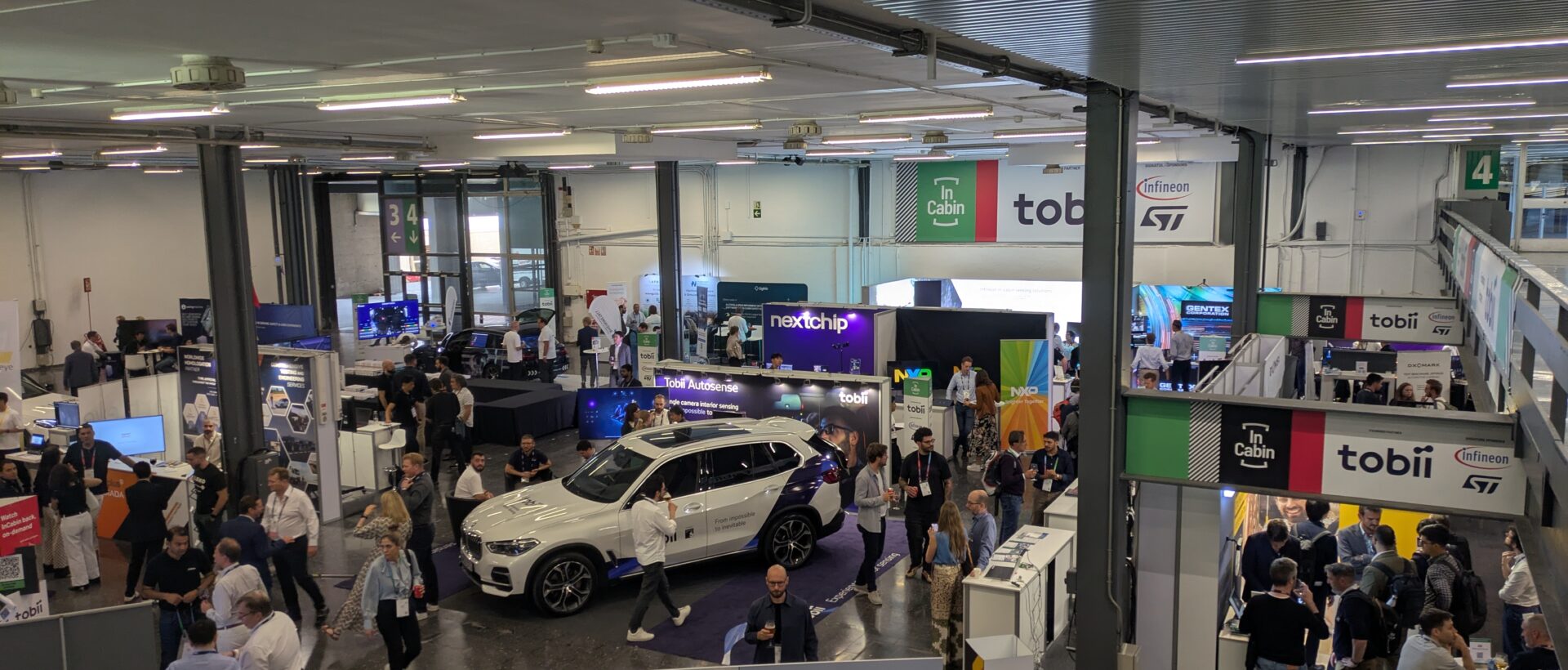
Last week, InCabin USA 2026 brought together automotive suppliers, technology developers and OEMs in Detroit. The event included a series of product launches and technical presentations centred on the latest advances in vehicle interior sensing, safety and user experience.
Announcements at the event covered occupant detection, seatbelt reminder systems, sensor fusion, haptics, Ultra-Wideband sensing platforms, and simulation tools for in-cabin system development.
Camera replaces seat sensors in Aptiv’s occupancy system
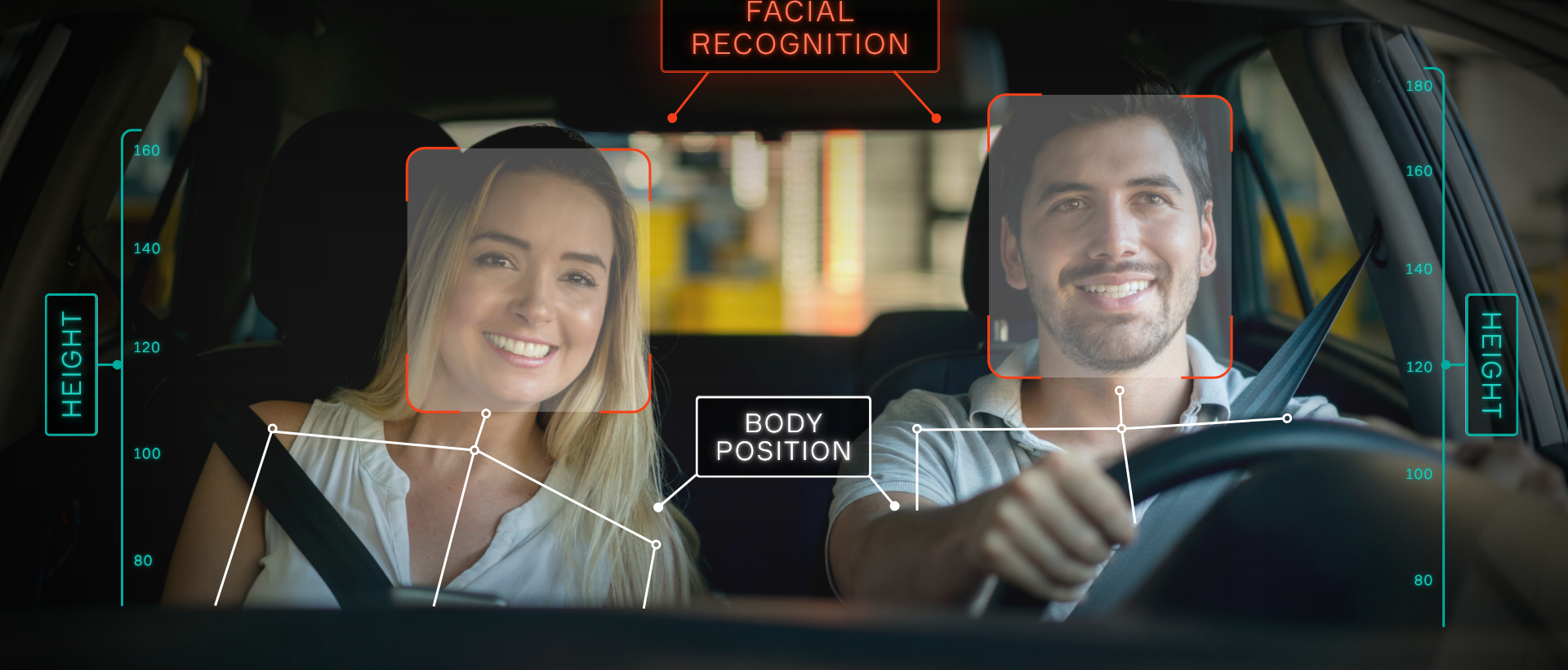
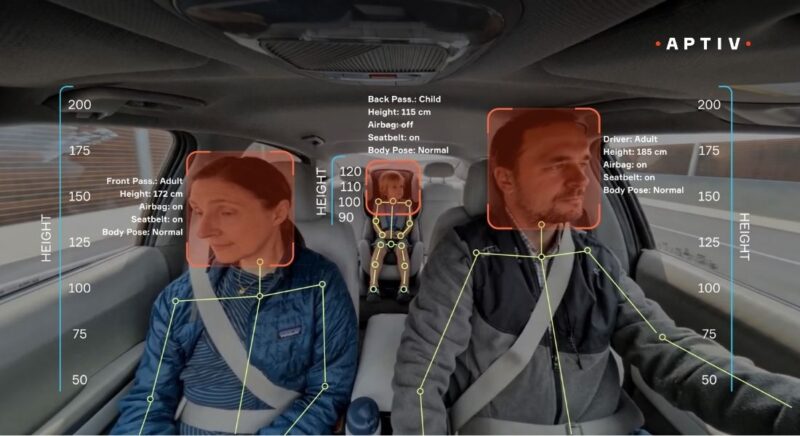
Aptiv has launched the industry’s first camera-only occupant detection system to determine who is sitting in a vehicle and how safety systems should respond. Its Advanced Occupancy Classification platform uses artificial intelligence and computer vision to classify occupants by height, weight, and body position to distinguish adults, children, infants in carriers, and inanimate objects without any in-seat pressure hardware.
The system achieved 100% accuracy across federal regulatory tests under FMVSS 208 and can reduce bill-of-materials cost by up to 40% compared with conventional sensor-based architectures. By accurately identifying seat occupancy and occupant type, the system enables critical safety functions such as airbag deployment decisions.
A single interior camera also unlocks more than 15 additional functions, from seatbelt monitoring to gesture recognition, and the system is over-the-air upgradable as regulations evolve. At InCabin 2026, this technology was demonstrated in a live vehicle.
Brighter Signals targets gap in seatbelt reminder technology
Meanwhile, Brighter Signals addressed what happens before airbag deployment becomes a factor, unveiling a new SeatBelt Reminder sensor designed to tackle a long-standing issue for the industry.
Legacy SBR sensors rely on a binary weight-present or weight-absent signal, which frequently fails to detect children, small adults, or anyone not sitting squarely. Conversely, it can chime when other items are placed on the seat.
Brighter Signals’ new fabric sensor reads weight distribution across the full seating surface rather than a single pressure point, allowing it to distinguish the characteristic load pattern of a human body from cargo. Crucially, it is a direct drop-in replacement for existing 2-pin ECU connections, requiring no harness change or software modification, and is priced to compete with the binary sensors it replaces.
Andrew Klein, Co-Founder and CEO of Brighter Signals, said:SBR is one of the most-complained-about systems in the modern vehicle, and the technology underneath it hasn’t meaningfully changed in twenty years. OEMs have to balance customer satisfaction with regulatory compliance — safety always comes first, but cost matters too — and until now that meant living with false chimes and conservative calibrations, because the only alternative was a much more expensive and more complicated sensor system. We’ve removed that trade-off. Our SBR sensor slots directly into the existing 2-pin ECU footprint, costs no more than the binary sensor it replaces, and brings a meaningful step-up in accuracy. For an OEM, this is the rarest kind of upgrade — better performance, same cost, no integration project.
Embedded AI proposes UWB as a unified sensing backbone
While Brighter Signals and Aptiv are focused on discrete sensing functions, Embedded AI is making the case for a unified sensing backbone. Its X-UWB platform, developed in Dresden, proposes that the Ultra-Wideband infrastructure already present in modern keyless access systems can be extended through software. The company proposed that it could be used to cover in-cabin presence and child detection, exterior gesture recognition, near-field motion detection, and precise car-to-infrastructure positioning for EV charging alignment.
Embedded AI argues that this consolidation could eliminate several dedicated sensor modules per vehicle, reducing wiring complexity and validation workload. The platform is modular, allowing OEMs to configure feature sets by trim level through software-defined packages rather than physical sensor additions.
Rico Petrick, CEO at Embedded AI said:X-UWB represents a shift from UWB as a single-purpose access technology to UWB as a scalable vehicle sensing platform. By reusing the hardware foundation already required for secure access, OEMs can reduce integration complexity while enabling new safety, comfort and differentiation features through software-defined packages.
IEE Sensing makes the case for fusion over individual inputs
IEE Sensing is tackling this same challenge with a different approach. At InCabin, Engineering Director Hector Guzman presented the evolution of the company’s Sensor Fusion technology, which integrates multiple sensing inputs into a unified real-time picture of the cabin interior.
The argument is that no single sensor type can reliably interpret occupant behaviour across all conditions; instead, fusion allows a system to move from detecting presence to understanding posture, anticipating risk, and responding intelligently. Attendees at the event could experience the technology firsthand from the driver’s seat of a demonstration vehicle.
Engineering Director Hector Guzman said:Sensor Fusion is the enabler for future in-cabin sensing needs where different sensor technologies will have to interact to deliver the best performance and experience to the OEMs and end-users.
Sony brings its INOV demo van to InCabin
Sony arrived in Detroit with its INOV demonstration van, built in Novi and carrying the company’s latest hardware and software sensing portfolio.
The headline hardware news was that the IMX775 image sensor is on track for production entry in Q2 2027.
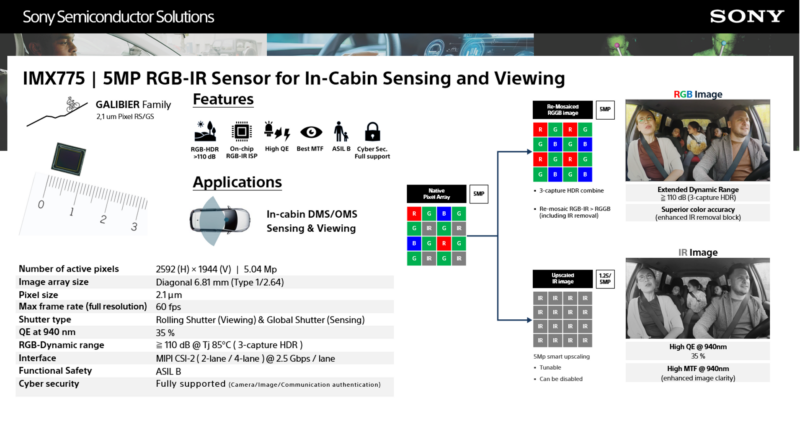
On the software side, Sony’s DepthSensing Solutions business showcased its occupant monitoring technology, which has been deployed in production vehicles since 2015. The company demonstrated software capable of supporting occupant monitoring and in-cabin perception functions using either 2D or 3D sensors from a range of manufacturers.
Furthermore, the company has expanded its US presence with a dedicated regional business developer now based domestically to support American OEMs directly.
Cirrus Logic brings smartphone haptics expertise to the automotive cabin
Haptics within the cabin were addressed by Cirrus Logic, which has introduced three new closed-loop haptic driver chips — the CS40L51, CS40L52, and CS40L53 — qualifying them to the AEC-Q100 automotive standard.
The company’s background is in consumer electronics and smartphone haptics, and its new family now brings that accumulated expertise to steering wheels, smart surfaces, centre consoles, and interactive displays. Closed-loop control allows the driver to respond in real time to actuator behaviour, compensating for manufacturing tolerances and temperature variation to deliver consistent tactile feedback regardless of conditions.
Vlad Bulavsky, Director, Automotive Solutions, Cirrus Logic said:Consumers expect a high level of responsiveness from haptics experiences. Early adoption of haptics in vehicles was not intuitive or consistently reliable, and didn’t deliver a realistic tactile experience. Cirrus Logic’s new low latency, closed-loop haptics technology addresses this challenge for automotive designers who are redefining how we interact with our cars and take user experience to the next level.
rFpro extends simulation platform into the vehicle interior
Underpinning much of this development is the question of how these systems are validated before a physical prototype exists. rFpro has launched AV elevate IN CABIN, an extension of its existing simulation platform into the vehicle interior.
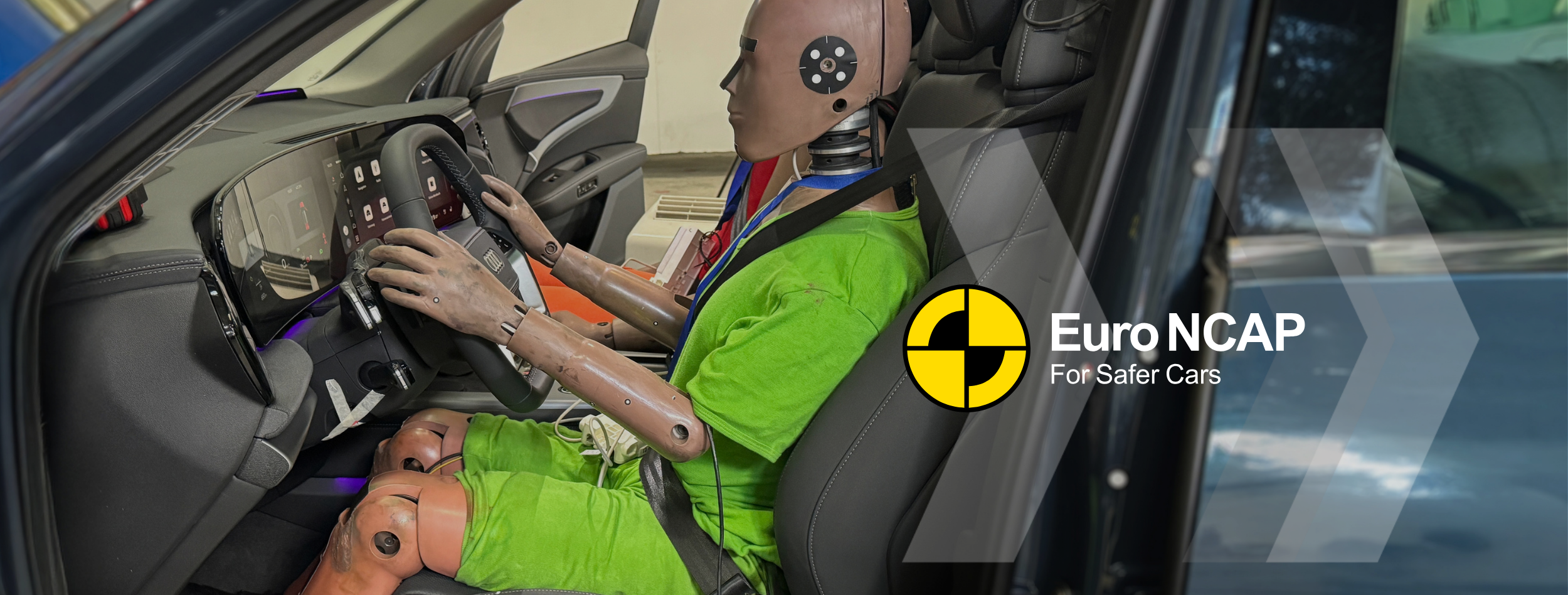
The timing is directly linked to Euro NCAP’s 2026 scoring revision, under which Driver Monitoring Systems has risen from a maximum of two points to 25, and Advanced Driver Distraction Warning becomes mandatory across the EU from July 2026.
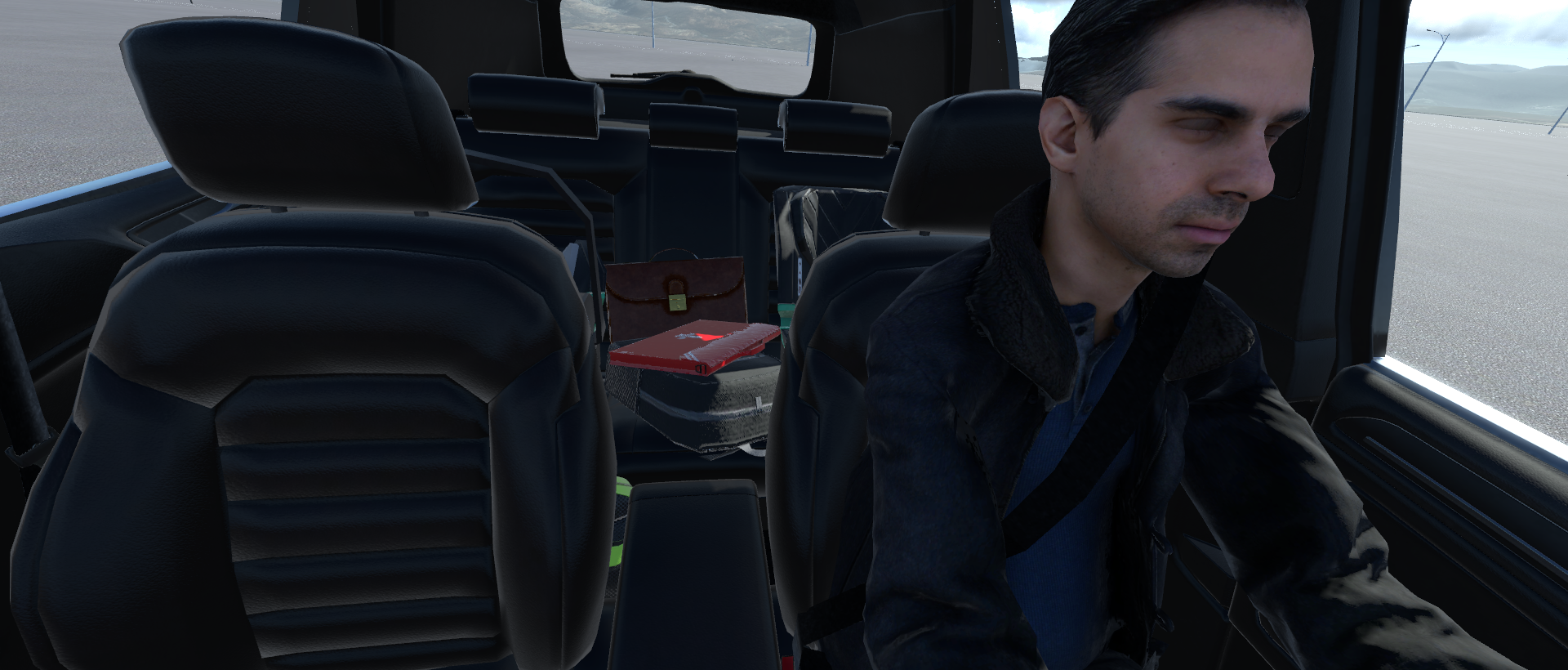
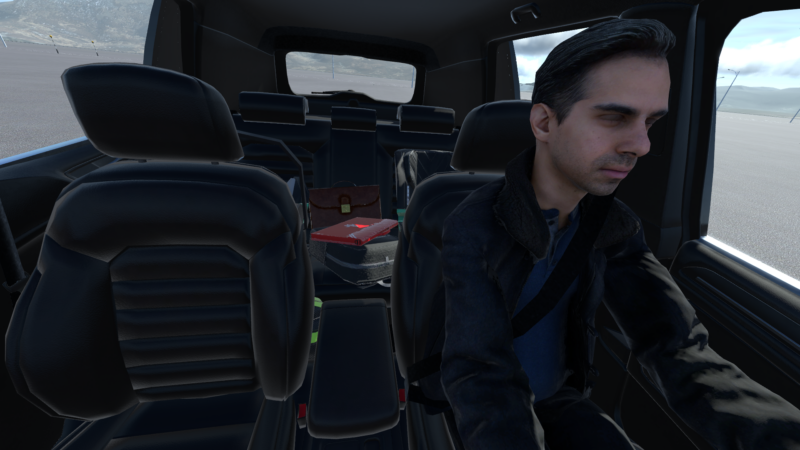
The new simulation environment models IR camera energy, radar reflectivity of interior materials, and micro-expressions. Scenario libraries are pre-configured to Euro NCAP test protocols, and the platform operates across driver-in-the-loop, hardware-in-the-loop, and software-in-the-loop environments.
rFpro is the only simulation platform covering both external and internal sensor development within a single toolchain.
Taken together, the announcements at InCabin USA 2026 reflect an industry working through the same underlying tension: the cabin is being asked to do significantly more — monitor, classify, protect, and personalise — while the regulatory bar is rising and the cost pressure on OEMs remains unrelenting. The solutions on show suggest that software, sensor fusion, and smarter use of existing hardware infrastructure are the dominant responses to that tension.