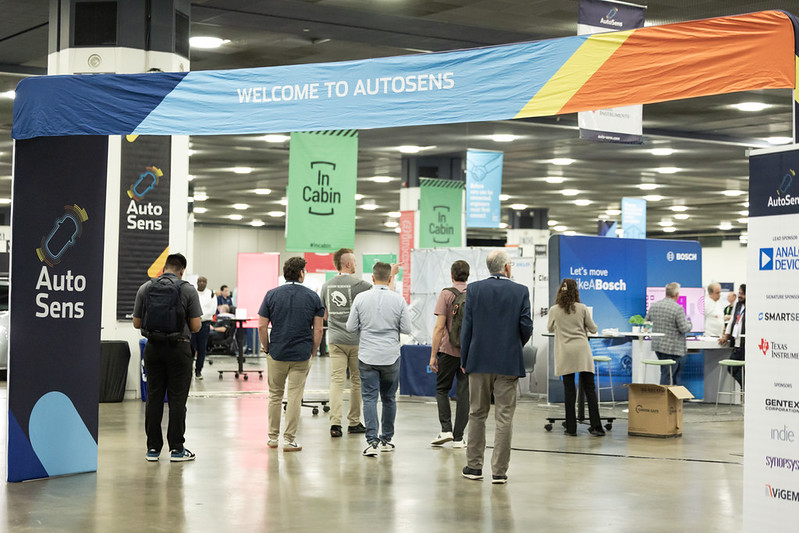
Earlier this month, Detroit became a focal point for discussions on the future of connected, intelligent and autonomous mobility. Across three industry events held at Huntington Place — AutoSens, InCabin USA and ITS America — speakers explored advances in sensing technologies, automated driving systems and connected infrastructure.
While the technologies on display demonstrated how rapidly the sector is evolving, conversations also explored whether the US’s fragmented regulatory landscape is slowing the deployment of autonomous vehicles.
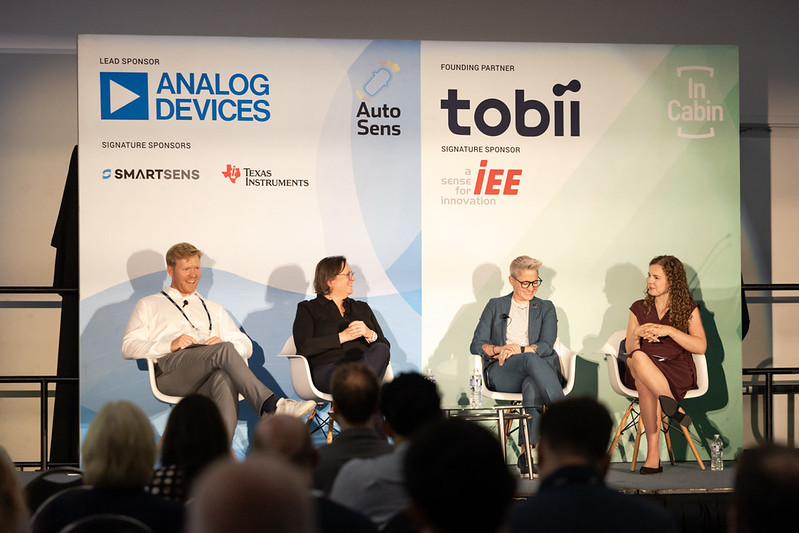
During the opening of AutoSens and InCabin, a panel discussion on public trust in automated vehicles brought together representatives from industry and government agencies, who argued that the absence of a federal framework is creating uncertainty for both developers and regulators. Tara Olds, Director of Connected and Automated Vehicles at the Minnesota Department of Transportation, highlighted how the lack of federal guidance has left some states in a regulatory grey area. Minnesota, for example, has not adopted specific autonomous vehicle legislation, creating uncertainty around the deployment of driverless services.
Tara Olds, Director of Connected and Automated Vehicles at the Minnesota Department of Transportation said:I would love to see some sort of federal framework from an AV perspective. Fifty-two states doing it all differently doesn't work for anybody.
From an industry perspective, the argument for federal action centred on establishing consistency. Nancy Bell, Sr. Legal Director, Regulatory Affairs & Policy at Rivian Automotive noted that complying with a patchwork of state-level requirements presents significant challenges for manufacturers seeking to deploy automated driving technologies. Rather than navigating dozens of different regulatory approaches, a federal framework would create a more predictable operating environment.
This argument is also relevant to the issue of public trust and acceptance, as regulation plays a key role in shaping public confidence. Clear standards can provide assurance that automated vehicle technologies are being evaluated against consistent requirements, rather than varying significantly from one state to another. Bell therefore argued that a federal framework could help demonstrate that deployment is occurring under recognised oversight.
However, speakers were equally clear that regulation alone would not solve the industry’s trust challenge. Public understanding remains limited, and perceptions are often shaped by headlines, social media and misconceptions about artificial intelligence.
Importantly, the panel also advocated against introducing prescriptive regulation. When asked about the risks of poorly designed rules, Bell warned that overly technology-specific requirements could inhibit innovation. Instead, she pointed to the need for performance-based standards that focus on demonstrable safety outcomes rather than mandating particular technical solutions.
The same concerns surfaced during a panel discussion at ITS America. Here, Ron Thaniel, Senior Director of Policy and Regulatory Affairs at Zoox, further framed the issue in terms of international competitiveness. While expressing confidence in the underlying technology, Thaniel argued that the US risks falling behind in the race against China if it continues to lack a clear national framework for autonomous vehicles.
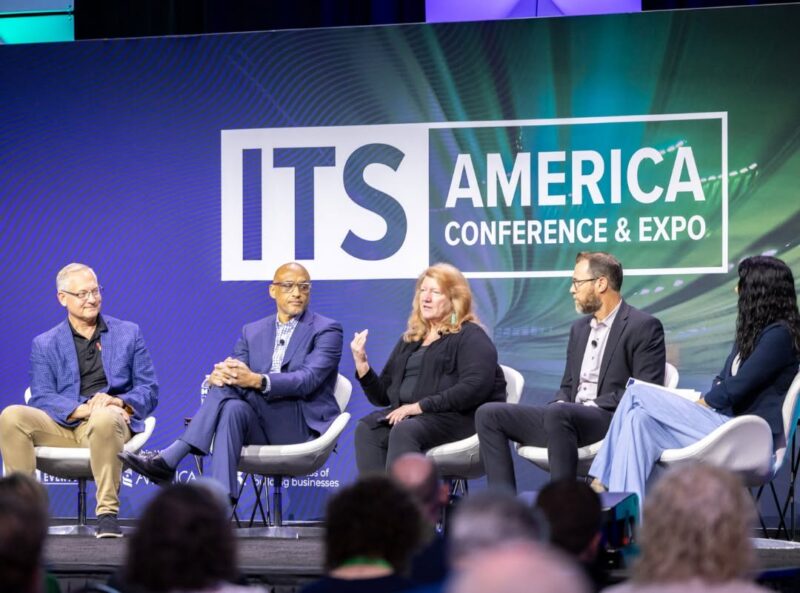
According to Thaniel, nearly a decade has passed since Congress last came close to establishing legislation that would clarify the respective roles of federal and state authorities. He noted that autonomous vehicle developers continue to face uncertainty over regulatory requirements, despite the technology now moving beyond pilot projects and into commercial deployment.
Scott Nash, Senior Director of Sales for Connected Vehicle Solutions at Verizon, also linked regulation to competitiveness. He argued that if the US fails to maintain its leadership position in emerging mobility technologies, other countries could ultimately define the standards that the industry is required to follow. From this perspective, regulatory certainty is crucial in ensuring the US remains influential in shaping the future rules governing connected and automated mobility.
Scott Nash, Senior Director of Sales, Connected Vehicle Solutions at Verizon said:If we do not continue our lead in the United States, then other countries will set standards that will have to be adopted and followed.
However, not all panellists accepted that international competition should be a primary lens through which autonomous vehicle deployment is viewed. Tracy Larkin Thomason, Director of the Nevada Department of Transportation, argued that attention should remain focused on how autonomous technologies can improve mobility and strengthen transportation networks within the US.
Thomason highlighted the importance of collaboration between public agencies and technology developers. She suggested that autonomous vehicle companies have not always fully embraced the capabilities of transportation departments, particularly in relation to digital infrastructure, data sharing and operational coordination. She argued that closer cooperation could help improve the reliability and resilience of transportation systems while supporting wider deployment of automated vehicles.
Furthermore, the discussion also underlined that a federal strategy for autonomous vehicles cannot be considered in isolation from public transport policy. Ron Thaniel of Zoox argued that public transit must remain the backbone of urban mobility, with autonomous vehicles complementing rather than replacing existing services.
Tim Haile, Executive Director of the Contra Costa Transportation Authority, echoed this view, suggesting that autonomous shuttles could help extend the reach of transit networks and improve first- and last-mile connections. This could help solve the fiscal cliff that transit agencies face when trying to balance both frequency and coverage.
As such, sustained investment in public transportation should form part of a broader federal mobility strategy, ensuring that emerging autonomous services strengthen rather than undermine existing transport networks.
Ron Thaniel, Senior Director of Policy and Regulatory Affairs at Zoox:We are part of the shared mobility ecosystem… the backbone of that is transit. We are not going to replace public transport—we need a strong, healthy transit system that feeds into autonomous services.
Overall, the discussions in Detroit underscored a sector moving rapidly into commercial deployment, while constrained by a lack of regulatory alignment and long-term policy certainty. As the technology matures, policymakers and operators must arguably ensure that innovation aligns with regulatory clarity, digital infrastructure investment and public transport integration to evolve as part of a coherent national mobility strategy.