How to automate maintenance alerts for rental fleets
Rental fleet maintenance automation is becoming essential for operators who want to scale without increasing operational complexity. Whether you manage cars, scooters, bikes, or mixed fleets, manual inspections and spreadsheets quickly fail once your fleet grows beyond a few dozen vehicles.
Breakdowns, missed services, and delayed repairs directly affect uptime, revenue, and customer satisfaction. Modern fleet technology makes it possible to automate maintenance using IoT telematics, onboard sensors, automatic error codes, mileage-based triggers, and structured dashboards.
Why manual maintenance tracking does not scale
In small fleets, maintenance is reactive. A customer reports an issue. A staff member checks the vehicle. Someone creates a task manually. This works for 20 vehicles, but for 200 it’s just too much work.
As fleets expand, issues are discovered too late, standards vary between locations, and staff spend more time coordinating than fixing. Rental fleet maintenance automation shifts operations from reactive repairs to preventive, system-driven workflows.
Using IoT telematics to monitor vehicles in real time
IoT telematics devices collect live data such as location, battery level, ignition status, engine health, and mileage. In car rental and car sharing fleets, telematics also track fuel levels, driving behaviour, and diagnostic information.
Instead of waiting for user reports, the system can trigger alerts automatically. For example:
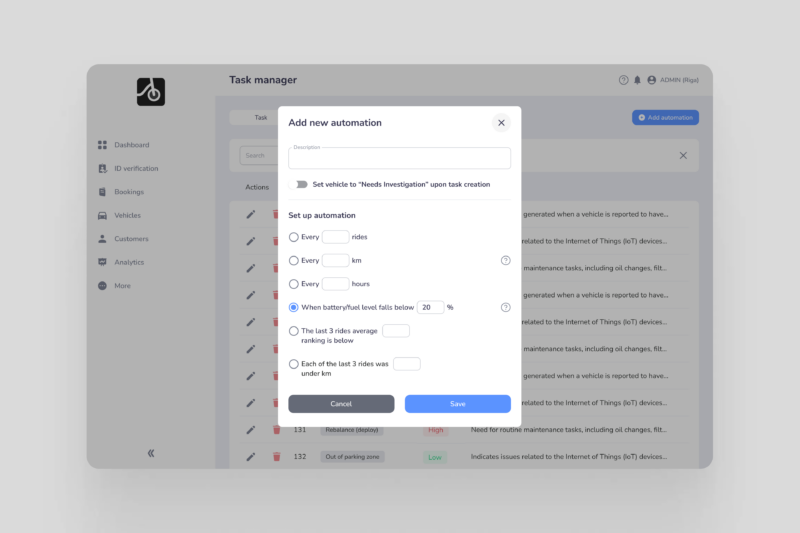
- when a battery drops below 20 percent
- when a vehicle reaches a service mileage threshold
- when a vehicle leaves a defined service area
- when the vehicle receives a few negative reviews
This data feeds directly into the fleet platform, where workflows assign tasks automatically, reducing response times and eliminating internal coordination delays.
Onboard sensors and automatic error codes
Modern vehicles generate diagnostic trouble codes when systems fail. In connected fleets, these codes appear instantly in the operator dashboard.
If a vehicle reports a brake or engine warning, the system can block it from new bookings, notify technicians, and create a repair task automatically. In micromobility fleets, IoT modules detect tilt events, battery degradation, failed unlock attempts, or controller errors.
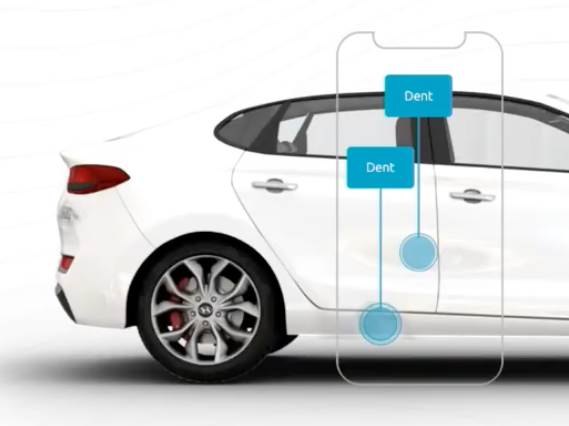
Digital reporting further improves vehicle availability. ATOM Mobility’s vehicle damage management feature shows how structured workflows reduce downtime and improve transparency.
Mileage-based and time-based service automation
Rule-based servicing is one of the most effective elements of rental fleet maintenance automation.
Operators can set simple service rules, such as:
- changing oil every 15,000 km
- checking brakes every 20,000 km
- running a safety check every six months
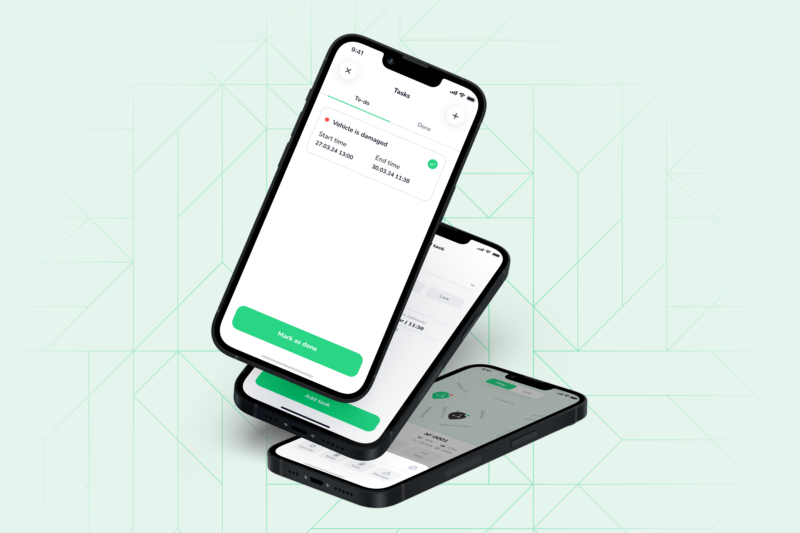
When a vehicle reaches one of these limits, the system creates a task automatically. The vehicle can also be temporarily removed from booking until the service is done. This becomes especially important when operating in multiple cities, because it keeps safety standards consistent across the entire fleet.
Maintenance dashboards and task automation
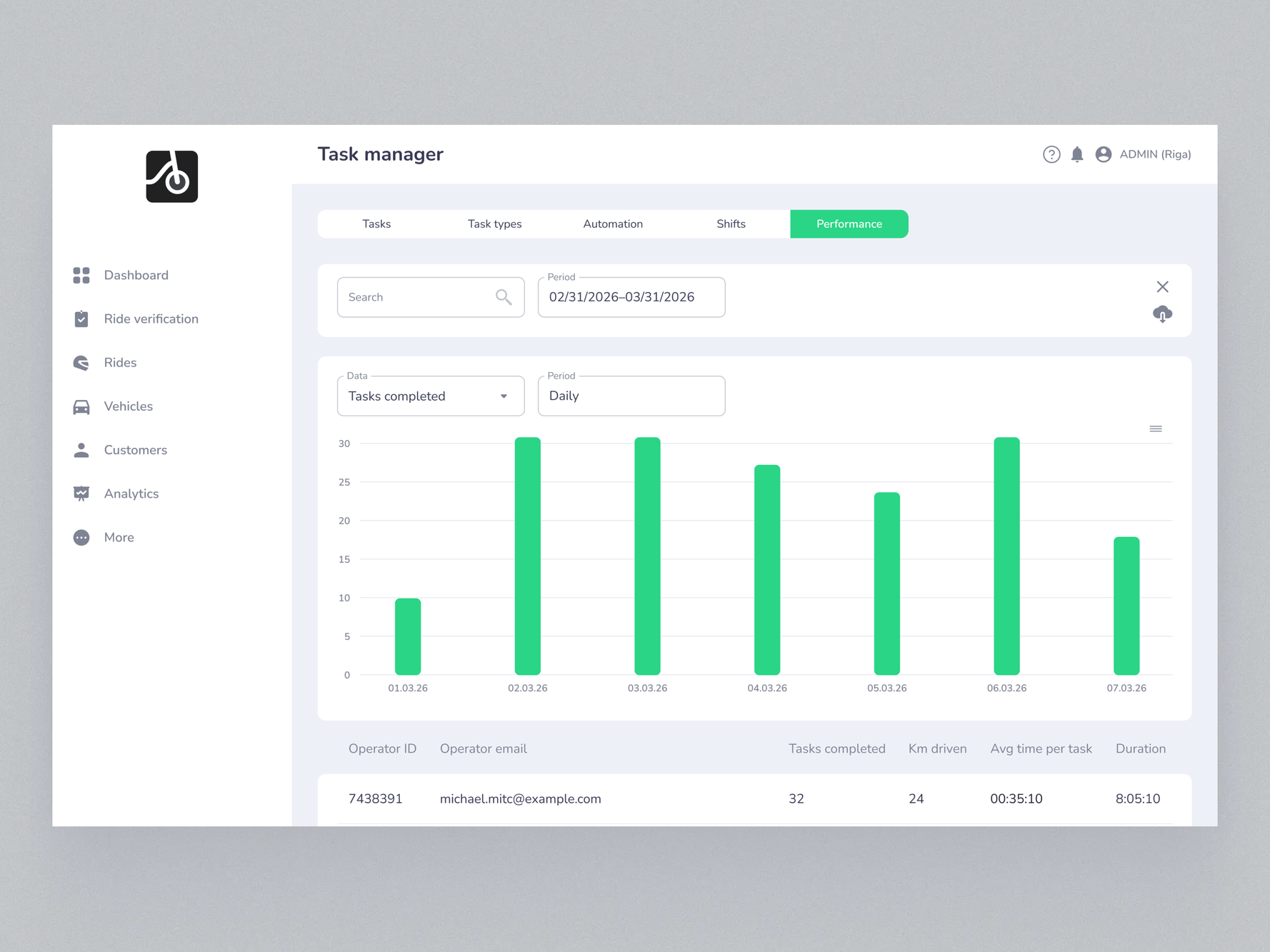
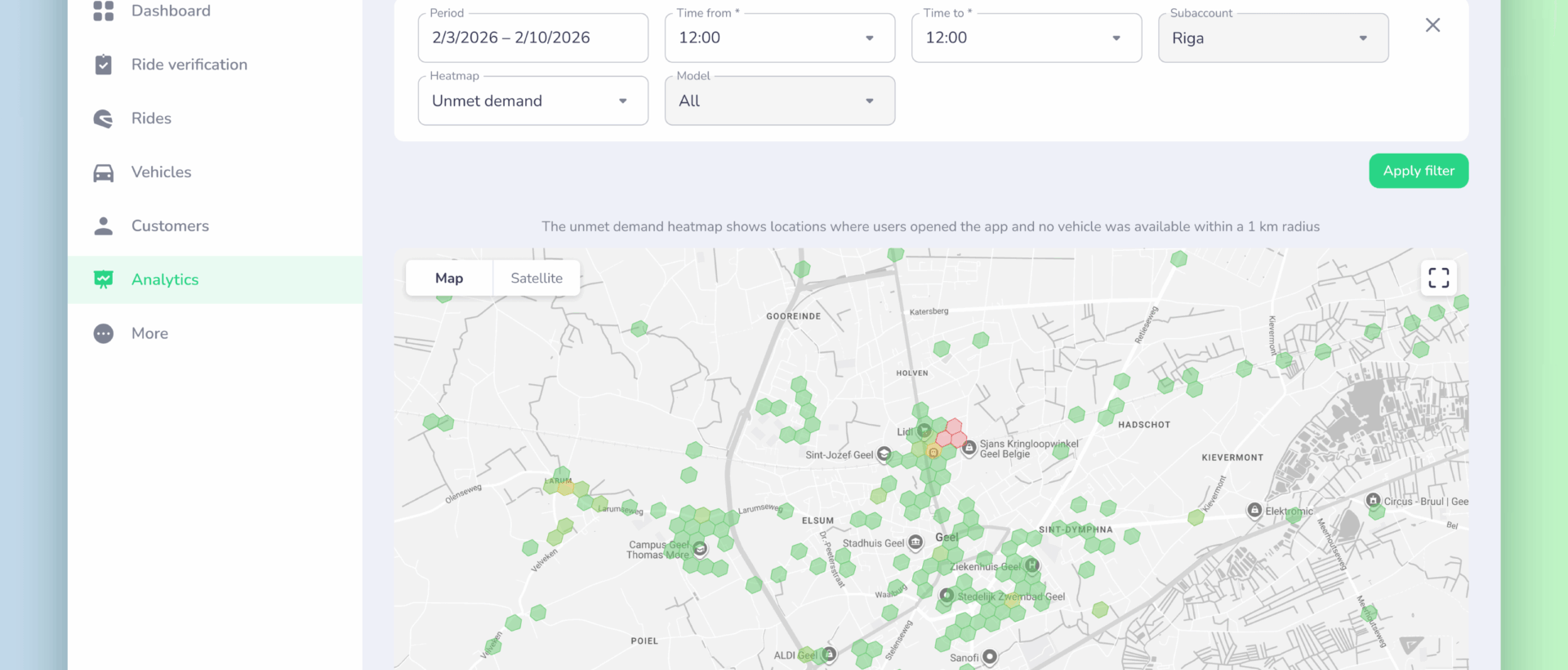
A maintenance dashboard centralises alerts, open issues, and upcoming service requirements.
With structured task management, teams can assign jobs, set priorities, track resolution times, and analyse recurring issues. ATOM Mobility’s Task Manager feature enables operators to convert alerts directly into trackable actions within one system. Alerts that turn into tasks automatically make it clear what needs fixing and when it should be handled.
From reactive to predictive maintenance
With enough historical data, fleets can move beyond fixed intervals. Operators can identify patterns such as faster brake wear in specific models or higher damage rates in certain areas. Predictive maintenance allows servicing based on actual usage intensity, reducing unnecessary costs while preventing major failures.
For operators growing from 50 to 500 vehicles, automation delivers clear advantages:
- higher uptime, because issues are detected earlier
- lower operational costs, since preventive repairs are cheaper than breakdowns
- improved safety and compliance, with no missed service intervals
- better customer experience, with fewer malfunctioning vehicles
- clearer performance metrics for management decisions
Automation supports maintenance teams with clearer priorities and better data.
Building the right automation stack
Effective rental fleet maintenance automation typically requires:
- IoT hardware
- a fleet management platform with automated alerts
- configurable service rules
- a task dashboard
- task automation logic
- analytics tools
When these components are connected, maintenance becomes scalable and controlled instead of reactive. This is especially important for operators running scooter, bike, car sharing, or rental businesses, where uptime directly impacts revenue and retention.
Rental fleet maintenance automation makes maintenance more organised and easier to manage as you grow. IoT telematics, automatic diagnostics, mileage alerts, and task dashboards help create clear processes that support expansion.
For rental and shared mobility operators who want to grow steadily, automating maintenance is essential. It helps keep operations stable and supports long-term profitability.
This article was originally published by ATOM Mobility.