Why intelligent mobility starts with design, not features
There is a useful test for any public transport system: does it require the passenger to think?
Not in the sense of route planning or departure times, those are natural parts of travel. But in the deeper sense: does the system ask passengers to understand its own complexity? To carry the right card, select the right channel, or reconcile why their concession applied yesterday but not today?
When passengers have to think about the system itself, the system has already failed them. Intelligent mobility, done well, is invisible. It removes friction so completely that what remains feels obvious, even though the engineering underneath is anything but.

At SkedGo, this is the design challenge we work on every day. And the lesson we return to, again and again, is that effortlessness is never achieved by adding features. It is achieved by rethinking the architecture.
The problem with layers
Public transport ticketing has evolved in layers. First came paper tickets, then smartcards, then contactless bank card acceptance, then mobile apps. Each layer represented genuine progress. Each was also introduced largely in isolation, without redesigning what came before.
The result, in most cities, is a system that works, but only if you know how it works. Regular commuters learn the rules. Occasional passengers, tourists and those with accessibility needs bear a disproportionate burden. Concession management often requires a separate process entirely. And operators inherit infrastructure that was never designed to communicate with itself.
This is not a technology failure. It is an architecture failure. The components are capable. What is missing is coherence.
Integration as a design principle
The shift that modern mobility platforms make is conceptually simple, even if technically demanding: instead of connecting existing layers, they start from a single, unified model of the passenger.
That model – account-based rather than media-based – changes what becomes possible.
When a passenger’s identity, payment credentials and entitlements are held in one place, fare capping happens automatically. Concession eligibility is verified at the point of travel, not at a counter. Payment history is visible and consistent regardless of whether the passenger tapped a bank card, scanned a QR code or used a smartcard. New fare policies can be applied centrally without issuing new physical media or retraining staff.
Crucially, the passenger does not need to understand any of this. They simply travel.
This is the shift from fragmentation to coherence and it requires that journey planning, digital identity and payment logic be designed together from the start, not bolted together after the fact.
What this means for operators
The passenger-facing simplicity of a well-designed unified platform is matched by corresponding depth on the operator side.
A cloud-native, modular architecture allows transport authorities to adapt without rebuilding. Fare rules can be updated centrally. Open APIs mean new services – on-demand vehicles, micromobility, emerging modes – can be integrated into the same ecosystem rather than sitting outside it. Real-time data flows between fleet management and passenger-facing systems mean that what operators see and what passengers experience are drawn from the same source of truth.
This matters particularly as cities face a combination of pressures that do not resolve easily alongside each other: fiscal discipline, sustainability targets, rising passenger expectations and the ongoing need to attract people back to public transport. Operational flexibility is not a luxury in this environment. It is a precondition for staying relevant.
Legacy systems, however capable in their original context, were not designed for this. They encode assumptions, about fare structures, about the modes being served, about the relationship between ticketing and journey planning, that are increasingly difficult to update without significant cost and disruption.
Modern platforms encode adaptability instead. That is a fundamentally different design philosophy.
The intelligence is in the integration
It is worth being precise about what “intelligent mobility” actually means, because the term is used loosely.
Intelligence in a mobility system is not primarily about AI or predictive algorithms, though those have their place. It is about the ability of the system to respond, to passenger behaviour, to network conditions, to policy change, without requiring manual intervention at every step.
That kind of intelligence only emerges when the components of the system are genuinely integrated: when a change to a fare rule propagates immediately to the journey planner; when a real-time service disruption updates the passenger’s itinerary before they reach the platform; when a concession change applies automatically across every channel the passenger might use.
These are not features. They are properties of a system designed with integration as a first principle.
Building for what comes next
One of the less visible advantages of a properly integrated mobility platform is its relationship with the future.
Cities do not know today exactly what their transport networks will look like in ten years. New modes will emerge. Policy priorities will shift. Passenger expectations, shaped by digital experiences in other domains, will continue to rise. A platform designed around fixed assumptions will require expensive reinvention each time those assumptions change.
A platform designed around openness and modularity, one where new services can be connected via open APIs, where the fare engine is rule-based rather than hard-coded, where the passenger identity layer is independent of any particular payment medium, is one that can evolve alongside the network it serves.
This is not future-proofing in the marketing sense. It is an architectural commitment to staying useful over time.
What effortless travel requires
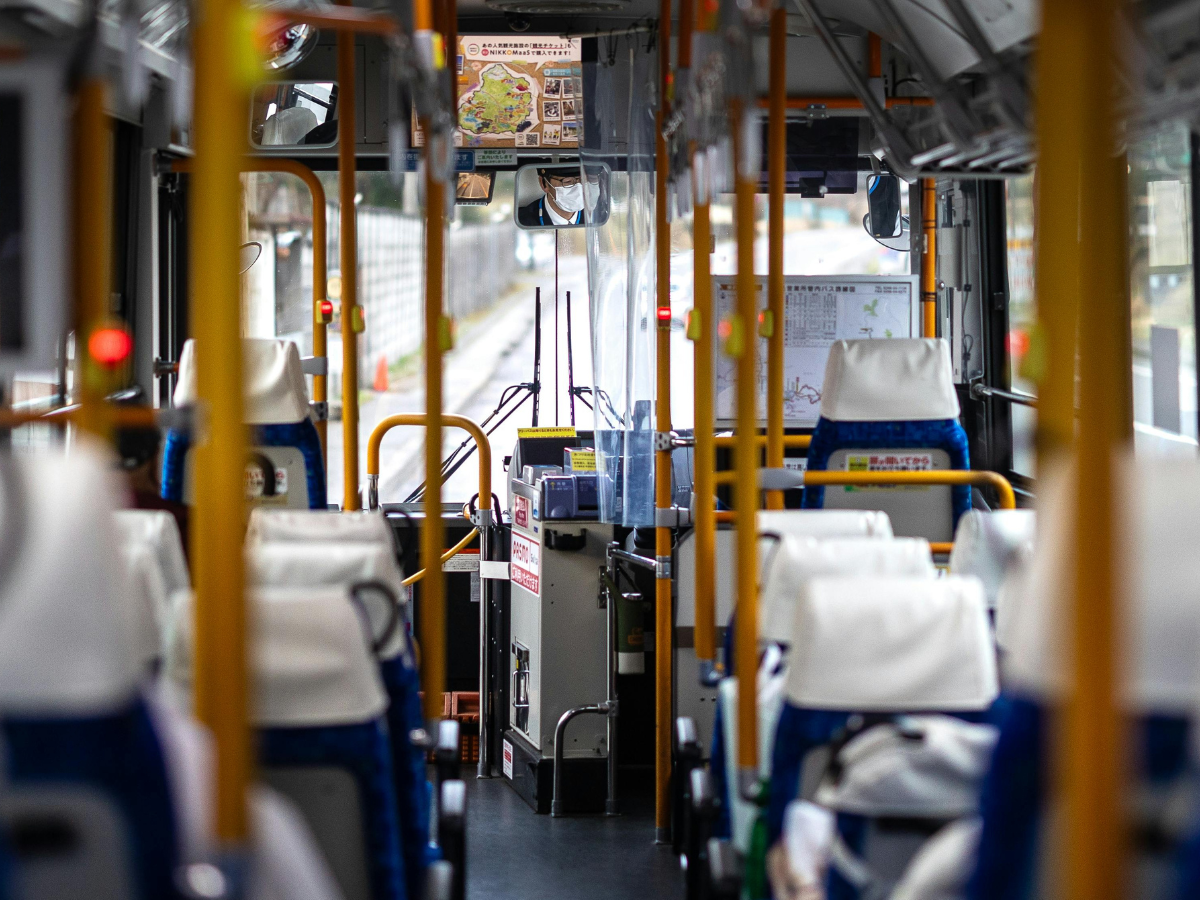
The passenger who boards a bus, taps a contactless card and travels without a second thought about fares, concessions or accounts is experiencing the outcome of decisions made long before that moment – decisions about how identity, payment and journey planning would relate to each other at the deepest level of the system.
Getting those decisions right is the work. And getting them right requires a willingness to design for coherence rather than capability, for the passenger’s experience rather than the operator’s existing infrastructure, and for long-term adaptability rather than near-term feature delivery.
When that work is done well, the technology disappears. What remains is a city that moves.
SkedGo’s multimodal platform powers journey planning and intelligent mobility solutions for transport authorities and operators worldwide. To learn more about how we approach integrated mobility design, get in touch.
This article was originally published by SkedGo.