BYD has backed its Urban Navigate on Autopilot (NOA) feature with a full damage coverage policy in China, underscoring its confidence in the performance of its God’s Eye intelligent driving system.
The announcement was made at the company’s Intelligence Strategy Launch Event in Shenzhen, alongside the unveiling of a new automotive driving chip.
The policy extends the company’s existing coverage for intelligent parking functions, making BYD the first automaker to provide combined coverage for both parking and urban assisted driving features under its advanced driver assistance systems (ADAS).
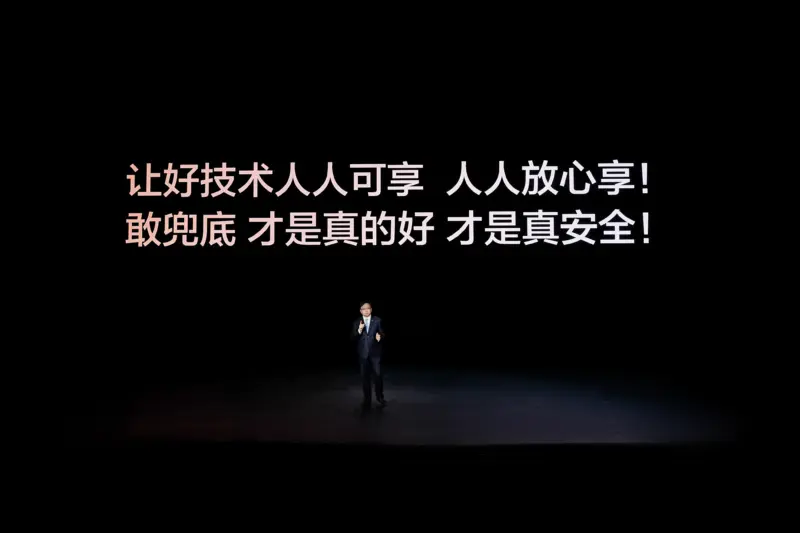
The one-year full damage coverage applies to both new customers and existing owners who upgrade to the God’s Eye system version 5.0 in China. It states that, where a legally liable accident occurs while the Urban NOA function is being used in compliance with applicable regulations, the company will cover associated financial losses.
The scheme is positioned by BYD as part of its broader approach to increasing user confidence in assisted driving technologies.
Expansion of Intelligent Driving Offering
BYD also announced that its God’s Eye system will now be optionally available across its full vehicle range in a LiDAR-equipped configuration. The system is intended to support ADAS capabilities across a wider set of models, rather than being limited to higher-end vehicles.
The company outlined three long-term objectives for its intelligent driving development: reducing traffic accidents, enhancing the capability of assisted driving systems, and expanding in-vehicle AI functionality to support broader user tasks.
At the same event, BYD introduced the XUANJI A3: a 4nm automotive-grade driving system-on-chip developed in-house. The chip is designed to support L3 and L4 levels of automated driving capability and can be configured in multi-chip setups to increase total computing performance per vehicle.
The company also outlined updates to its God’s Eye system, including a revised architecture, expanded sensor configuration, and upgraded AI models designed to process driving data from real-world conditions.
Furthermore, BYD introduced an updated in-car interface under its DiLink platform, featuring an AI-based assistant designed to carry out tasks and respond to driver inputs in real time. The system is intended to support a wider range of in-vehicle functions through natural interaction.
These announcements reflect increasing competition among automakers developing advanced driver assistance systems, particularly in China, where firms are investing in both hardware and software capabilities to expand automated driving features. BYD’s latest policy combines system expansion with a financial coverage commitment tied to specific usage conditions.
The company described its broader strategy as focusing on safety, system capability, and long-term development of intelligent vehicle technologies. BYD said its approach is supported by large-scale operational data from its assisted driving fleet and daily driving mileage generated across its vehicles.