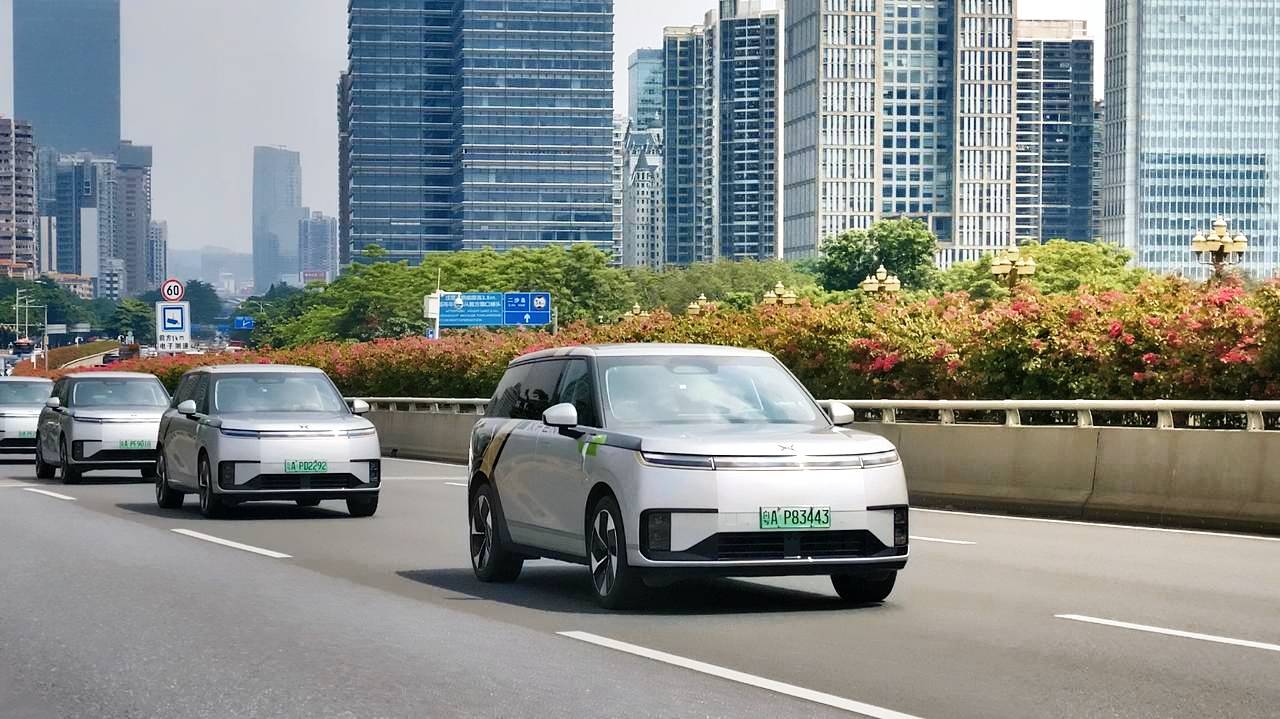
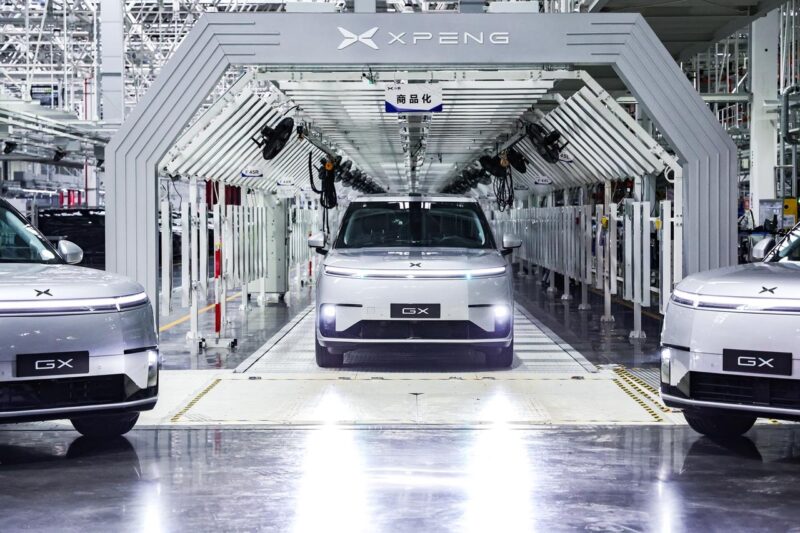
Chinese electric vehicle manufacturer XPENG has announced the rollout of its first mass-produced Robotaxi vehicle in Guangzhou. This marks a new phase in the company’s autonomous driving programme.
The vehicle is the first Robotaxi in China to enter mass production through a fully in-house development process covering software, AI chips and vehicle engineering. The model is built on XPENG’s GX platform and has been developed to Level 4 autonomous driving standards, where the vehicle can operate without human intervention in defined conditions.
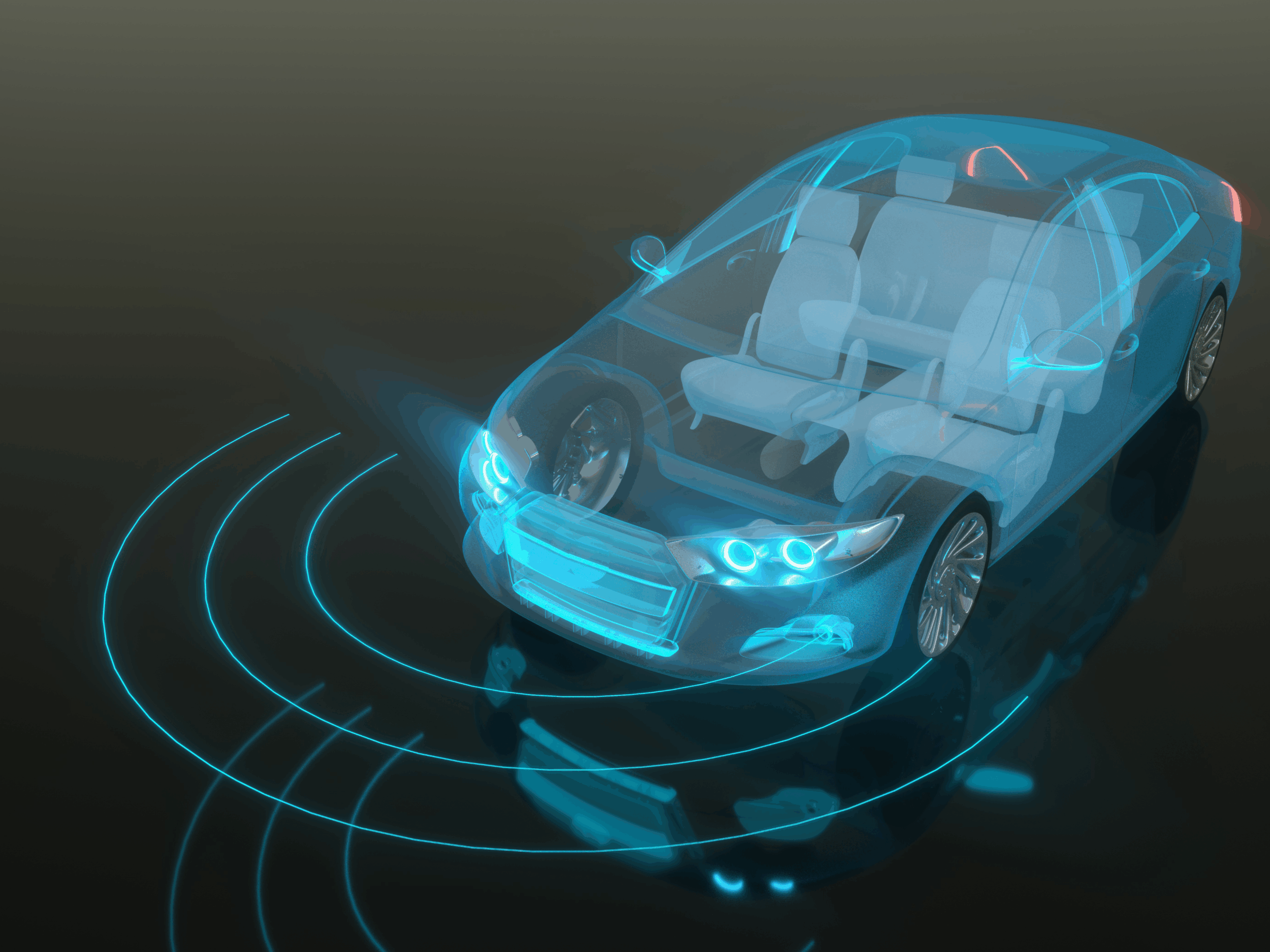
The Robotaxi uses four self-developed Turing AI chips, providing 3,000 TOPS (trillions of operations per second) of effective onboard computing power. The vehicle operates using a vision-based autonomous driving system and does not rely on LiDAR sensors or high-definition maps.
The company’s VLA 2.0 end-to-end AI model handles perception and driving decisions directly, reducing response latency to below 80 milliseconds. The system is intended to support deployment across different cities and regions without extensive local mapping.
For passengers, the Robotaxi cabin includes features such as privacy glass, reclining gravity seats and rear entertainment screens. Passengers can interact with vehicle controls and media functions through a built-in voice assistant.
In January, XPENG obtained a road testing permit for intelligent connected vehicles in Guangzhou, allowing the company to begin routine public road testing for its Level 4 autonomous driving system. In March, the manufacturer established a dedicated Robotaxi business unit responsible for research, testing and commercial operations.
Pilot Robotaxi operations are expected to begin in the second half of 2026. The company plans to use the trial phase to assess technical performance, passenger adoption and operational models before moving towards fully autonomous services without onboard safety operators, which it aims to introduce by early 2027.
The company also announced plans to open its Robotaxi software development kit (SDK) to external partners. Chinese mapping and mobility platform Amap will become the first ecosystem partner under the programme.
The Robotaxi platform shares the same VLA 2.0 AI foundation used in other projects within its physical AI division, including the humanoid robot IRON and the company’s flying car programme.