Vertical Aerospace has completed a piloted thrustborne transition using a full-scale electric vertical take-off and landing (eVTOL) aircraft, marking a technical step in the development of its aircraft programme.
The flight took place under the oversight of the UK Civil Aviation Authority, which is working with the European Union Aviation Safety Agency on certification requirements for the company’s aircraft, known as Valo.
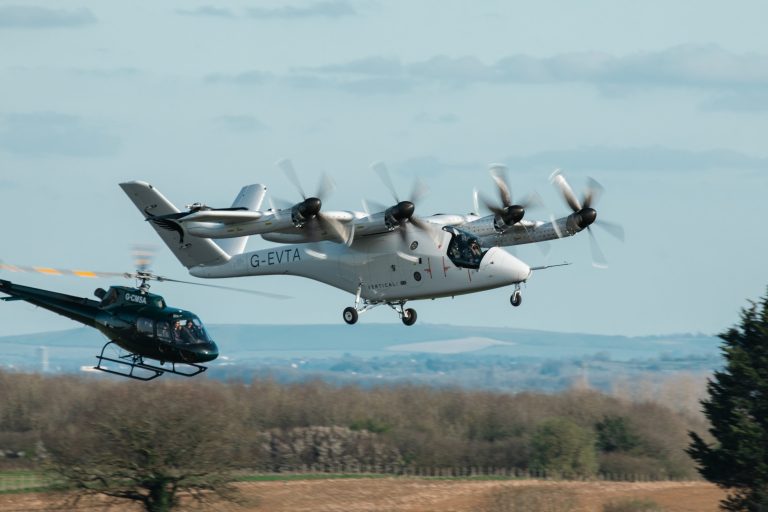
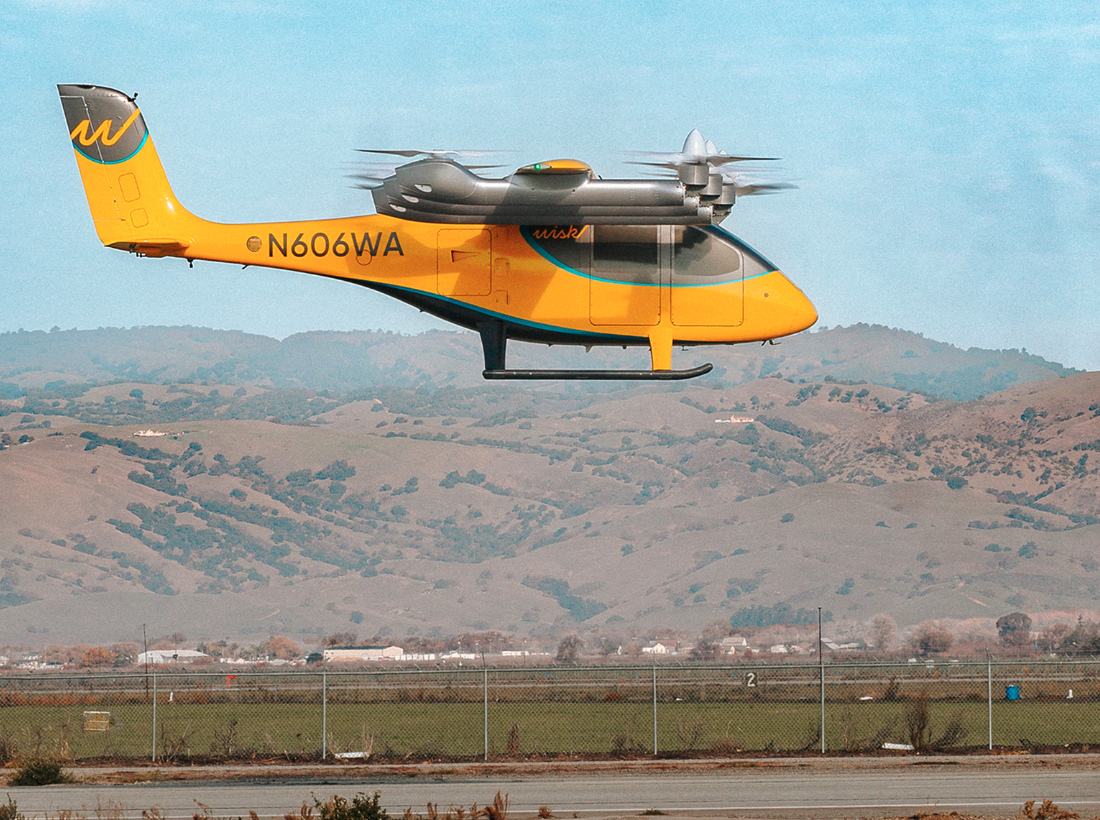
During the test, a pilot lifted the aircraft vertically before transitioning into forward, wingborne flight. The manoeuvre involves shifting lift from rotors to wings, a process regarded as one of the more complex aspects of eVTOL operations. The aircraft subsequently completed a conventional runway landing.
The flight was conducted on 2 April at Cotswold Airport by test pilot Paul Stone. According to the company, the aircraft accelerated steadily as its forward propellers tilted and its rear propellers retracted.
The thrustborne transition represents one half of a two-stage process required for routine operations. In a full sequence, the aircraft would also transition back from forward flight to a vertical landing, allowing it to operate without a runway.
The test forms part of a broader flight programme carried out over nearly two years. Previous trials have included hover, vertical take-off, wingborne flight and vertical landing, alongside operations in open European airspace and airport-to-airport demonstrations.
Each phase of testing is conducted under a permit-to-fly framework and supported by ground-based validation, simulation work and data submissions to regulators. These steps contribute to the certification pathway for the aircraft.
Stuart Simpson, Chief Executive Officer at Vertical Aerospace, said:This marks a turning point not just for Vertical Aerospace, but for the entire advanced air mobility industry. Achieving piloted thrustborne transition under active regulatory oversight - alongside the recently announced financing package - demonstrates that we have solved the hardest engineering challenges, have the regulatory relationships to complete certification, and now have the financial foundation to see this through to commercial service.
Further testing is expected to focus on completing the two-way transition sequence as part of the certification process.