A study led by researchers at Southern Methodist University (SMU) has found that widespread adoption of autonomous vehicles could reduce traffic congestion and travel delays across the Dallas–Fort Worth (DFW) region by 2045, without the need to expand the existing road network.
The research, published in the Journal of Urban Technology, examined how connected and autonomous vehicles (CAVs) could affect traffic conditions using the North Central Texas Council of Governments’ Transportation Analytical Forecasting Tool (TAFT), a regional travel model covering 13 counties.
The research team, led by SMU civil and environmental engineering professor Khaled Abdelghany, assessed 25 scenarios based on different levels of autonomous vehicle adoption. These included fleets consisting of 25%, 50% and 100% driverless vehicles, with each scenario compared against a 2045 forecast that assumed no autonomous vehicles.
The researchers also investigated whether communication between autonomous vehicles and traffic signals could further improve traffic flow, and considered the impact of people choosing to live further from their workplaces if they no longer needed to drive themselves.
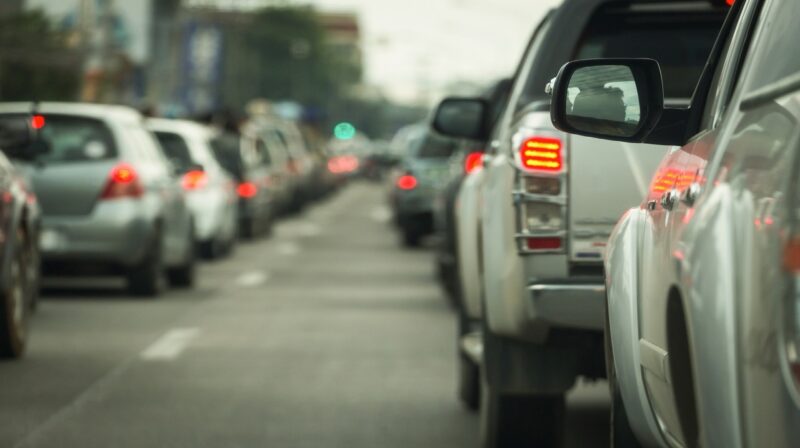
According to the study, the largest improvements occurred when all vehicles on the road were autonomous. Under this scenario, traffic delays across the DFW region fell by around 33%, reducing the amount of time drivers spent in congested traffic.
The study also found that daily vehicle-hours travelled could decrease by at least 19% if households and employment gradually shifted from central areas of Dallas, Tarrant, Collin and Denton counties towards surrounding communities. Vehicle-hours travelled is a measure of the total time spent by vehicles travelling across a road network.
The addition of vehicle-to-signal communication technology produced only limited further improvements once autonomous vehicles had been widely adopted.
Abdelghany, a fellow at the Stephanie and Hunter Hunt Institute for Engineering and Humanity said:Traffic congestion is often driven not only by high demand but also by speed variability and stop-and-go behavior, which reduce flow efficiency. Autonomous vehicles may help mitigate these effects through smoother and more coordinated driving.
The research was partially funded by the North Central Texas Council of Governments and carried out in collaboration with Behruz Paschai, a senior research engineer with the Texas Transportation Institute’s Travel Forecasting Program, and Abby Morgan, an associate engineer at Kittelson & Associates.
Alongside the potential traffic benefits, the researchers noted that autonomous vehicles could improve access to transport for people who are unable to drive, including older adults and those with visual impairments or disabilities.
The authors acknowledged that public acceptance of driverless vehicles remains uncertain, but said the modelling indicates that high levels of adoption could improve the efficiency of the region’s transport network over the coming decades.