A study by researchers at Binghamton University, State University of New York, has examined whether people with a history of head injuries may experience greater difficulty taking control of a partially automated vehicle.
Published in Traffic Injury Prevention, the study used a driving simulator to assess how participants responded when they were required to resume manual control of a vehicle.
The research focused on Level 3 automated driving, in which a vehicle can manage routine driving in defined conditions but requires the driver to take control when the system encounters a situation it cannot handle.
Researchers from Binghamton University’s departments of Physical Therapy and Psychology and its School of Systems Science and Industrial Engineering carried out the study.
Simulator Tests
The research team compared two groups of participants. One group consisted of ice hockey players with a history of concussions or repeated impacts to the head. The second group comprised participants of a similar age who did not participate in high-contact sports.
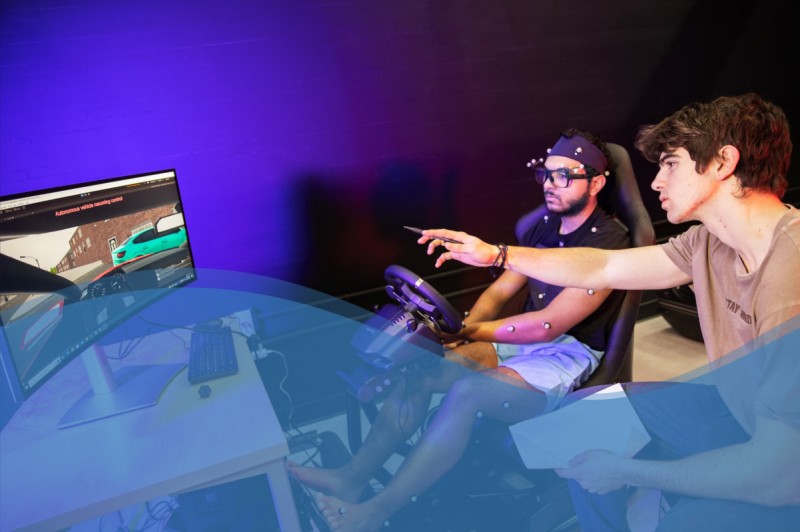
Participants completed a one-hour driving session using a simulator at Binghamton University’s Human Cognitive and Visual Behavior Lab. The EF-CAR simulator was used to recreate vehicle dynamics and scenarios requiring drivers to respond to hazards.
The researchers assessed how well participants anticipated hazards and how effectively they responded when they were required to take manual control.
The hockey players did not perform worse than the comparison group on cognitive tests and did not report greater levels of mental stress following the simulation. However, differences were observed in their responses to takeover events.
The hockey players successfully took control in 81% of the required interventions, compared with 93% for the comparison group. Researchers also found that the hockey players spent less time successfully maintaining manual control following a takeover.
The study additionally assessed situational awareness by asking participants questions following takeover events. The researchers found that the hockey players had greater difficulty providing correct answers quickly, which the study associates with the ability to process information about the developing driving environment.
Implications for Automated Driving
The findings raise questions about how drivers will respond after spending periods of time disengaged from driving while using automated systems.
Conditionally automated vehicles are designed to allow drivers to perform other activities while the system controls the vehicle in appropriate circumstances. However, drivers may still be required to intervene when conditions fall outside the system’s operating capabilities.
Binghamton University Associate Professor of Physical Therapy Vipul Lugade said:Our perception is that a conditionally automated vehicle will provide individuals with an opportunity to relax, read, work, or perform any number of other non-driving-related tasks. Instead, however, the 'self-driving cars' are going to create an unusual transition period where you are not quite a passenger and not always a driver either. What this study brings into question is whether people will actually be willing, and more importantly, able to resume driving after long periods of disengagement.
The findings could inform future development of automated vehicle interfaces and intervention systems. The researchers also identified driver assessment and training as areas that could be explored to help accommodate differences in cognitive performance.
The study does not establish that a history of head injury makes someone unable to use an automated vehicle. Instead, the researchers said further work is needed to understand how previous head injuries and other individual differences may affect a driver’s ability to respond to takeover requests.
As automated driving systems become more widely deployed, understanding how people respond when automation disengages will be important for designing systems that support safe transitions between automated and manual driving.