NVIDIA has launched Alpamayo 2 Super, a new open artificial intelligence (AI) model designed to support the development of Level 4 autonomous vehicles, such as robotaxis.
The launch was revealed at NVIDIA GTC Taipei and forms part of a wider expansion of the company’s autonomous vehicle technology platform. Alongside the new model, NVIDIA introduced additional tools for simulation, training and data generation intended to help developers build and test self-driving systems more efficiently.
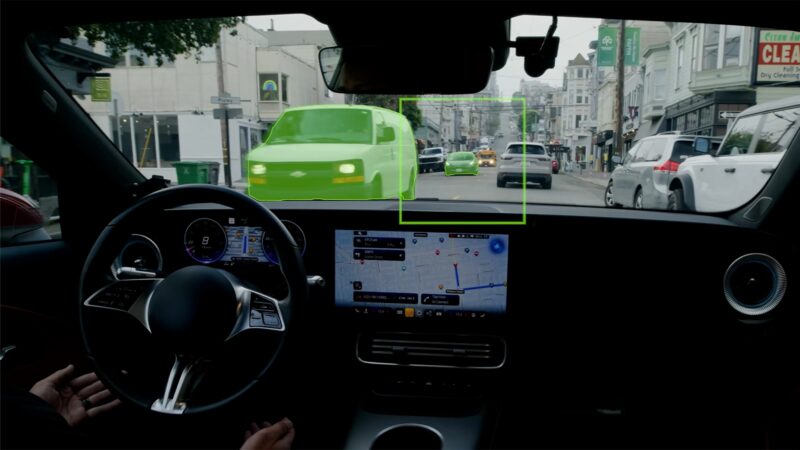
Alpamayo 2 Super is a 32-billion-parameter vision-language-action (VLA) model that combines perception, reasoning and decision-making capabilities within a single framework. The model is designed to reason about driving situations, plan actions and operate across the full autonomous driving stack.
The new model aims to reduce the need for vehicle manufacturers and developers to build key autonomous driving infrastructure from the ground up. It also seeks to improve transparency by providing reasoning traces that can help engineers understand how decisions are made during driving scenarios.
NVIDIA founder and chief executive Jensen Huang said:Alpamayo is the moment cars begin to safely reason, not just drive. Only NVIDIA makes available open models, simulation, real-world data and agent skills so the entire global robotaxi ecosystem can develop level 4 capabilities that understand edge cases, explain decisions, earn trust and scale safely to millions of vehicles.
Alpamayo 2 Super expands significantly on previous versions of the Alpamayo platform. Earlier models contained around 10 billion parameters, while the latest release increases that number to 32 billion.
The additional scale improves the model’s ability to understand three-dimensional environments, predict vehicle trajectories and respond to uncommon driving situations that are often difficult to capture in traditional training datasets.
Another change is the introduction of full-surround perception. Rather than relying mainly on forward-facing camera views, the model can process information from front, side and rear sensors to build a more complete understanding of its surroundings.
The system also introduces ‘Meta-Actions’, allowing it to predict higher-level driving decisions such as yielding, changing lanes or stopping before those actions are translated into vehicle controls.
The company confirmed that Alpamayo 2 Super will be released as an open model, with inference code expected to be available on GitHub and model weights planned for release on Hugging Face later this summer.
NVIDIA also announced that its Chain-of-Causation auto-labelling pipeline will be made available as open-source software. The tool automatically generates reasoning-based labels from driving video clips without requiring manual annotation.
Alongside Alpamayo 2 Super, NVIDIA announced AlpaGym, an open-source reinforcement learning framework designed for closed-loop autonomous vehicle training.
Traditional autonomous driving models are often trained using recorded driving data. AlpaGym instead places models in simulated environments where their decisions continuously affect future outcomes. This allows developers to observe how mistakes can accumulate over time and identify potential weaknesses before vehicles are deployed on public roads.
Furthermore, the company also introduced OmniDreams, a generative world model designed to create photorealistic driving environments for simulation.
One of the challenges in autonomous vehicle development is training systems to handle rare or unusual situations that may not appear frequently in real-world data. OmniDreams is intended to generate these ‘long-tail’ scenarios at scale, allowing developers to expose models to a wider range of driving conditions.
Finally, NVIDIA unveiled new physical AI agent skills to support autonomous vehicle development workflows. These tools are designed to assist with simulation, data generation and model training tasks.
Among them is Neural Reconstruction, powered by NVIDIA Omniverse NuRec. The technology can convert real-world fleet data into detailed 3D scenes that can be reused in simulation and adapted for different sensor configurations.
This approach could help developers create synthetic training data more efficiently while reducing the time required to prepare and label datasets.