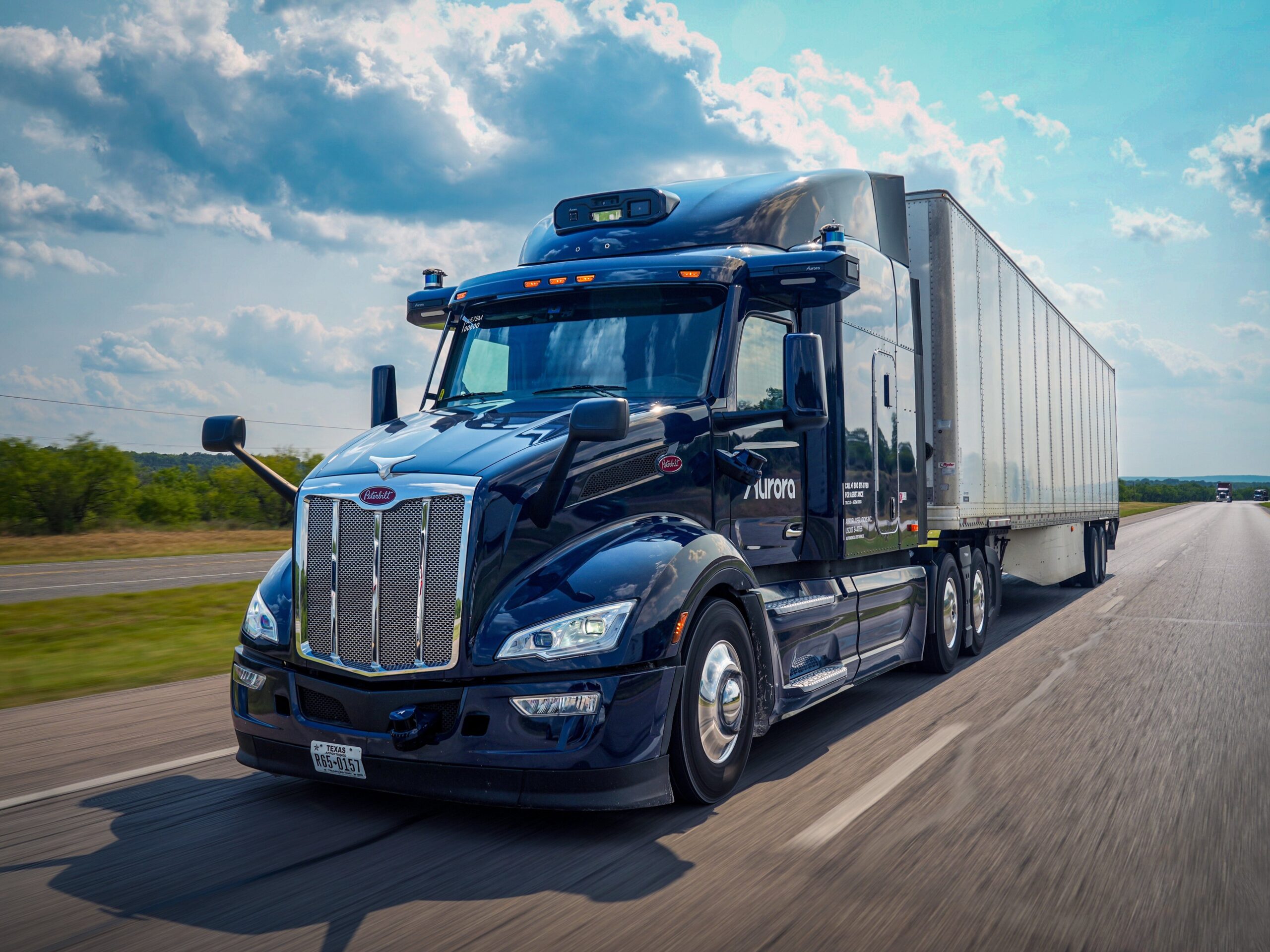
With the start of Aurora’s day- and night-time driverless operations, customers are well-positioned to double utilization potential of self-driving trucks.
Today, only one company is hauling freight autonomously via heavy-duty trucks for customers on public roads in the U.S.: Aurora. And as we recently shared, the Aurora Driver has been validated for nighttime driverless operations between Dallas to Houston.
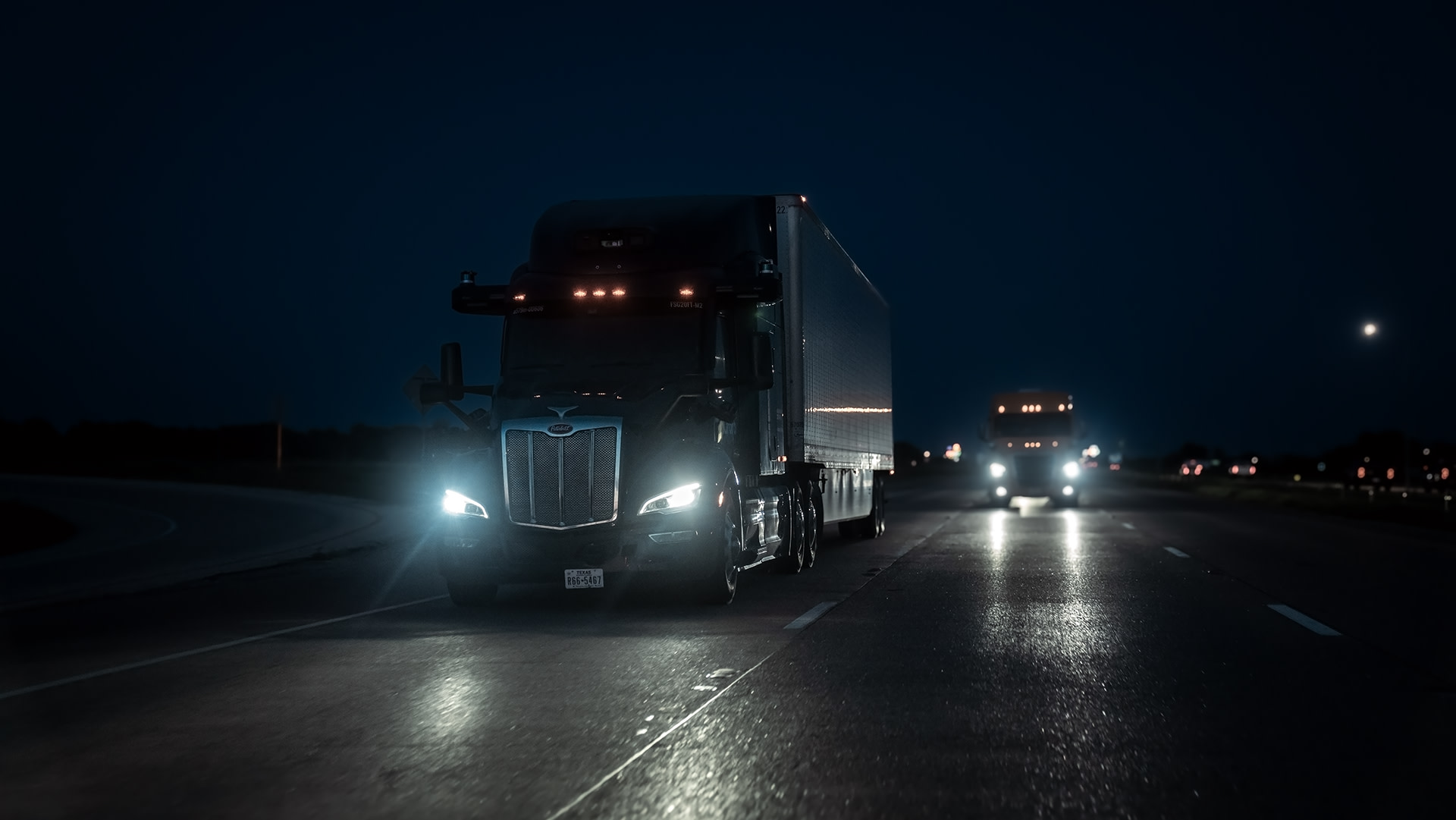
This is more than just self-driving when the sun goes down. Nighttime autonomous operations will unlock new levels of efficiency for customers running long-haul routes, especially those who frequently operate at night, at a time when demand for faster, more efficient delivery has never been higher.
Commercial trucks create value only as long as they’re moving goods. Today’s logistics space struggles with truck underutilization. Human drivers have a 14-hour window to drive a maximum of 11 hours, due to hours-of-service limitations. Aurora’s autonomous trucks don’t get fatigued and aren’t subject to these rules, which opens the door to longer driving hours and distances — more than doubling a truck’s utilization potential.
The true impact of autonomy will become clear as Aurora prepares to extend its Fort Worth to El Paso lane to Phoenix by the end of the year. With a distance spanning over 1,000 miles and at least 15 hours to complete, Aurora’s self-driving trucks will have the potential to cut that single driver transit time in half.
Engineered for Highway Driving
Safe night driving is made possible by Aurora’s proprietary FirstLight lidar. While lidar is used in a broad array of applications today, Aurora’s FirstLight frequency modulating continuous wave technology can see further than conventional pulse lidar technologies.
FirstLight instantly measures not just where an object is, but how fast it’s moving toward or away from its source. It is also single-photon sensitive, meaning it can detect the tiniest amounts of light, enabling exceptional performance in challenging dark environments.
Our FirstLight lidar can see objects over 450 meters away — nearly twice as far as conventional lidar. This incredible range gives the Aurora Driver a crucial nine-second head start to react to anything unexpected on the road, like a pedestrian in the dark that a human driver might miss entirely.
This superhuman perception enables us to deploy our products at highway speeds, where even fractions of a second can affect a vehicle’s ability to react to unexpected obstacles.
Built on a Foundation of Safety
We have been autonomously hauling customer freight at night, with vehicle operators present, for years. Since the start of 2023, we’ve delivered more than 3,000 nighttime loads over 700,000 commercial miles, while continuing to refine the Aurora Driver’s capabilities.
Bringing nighttime driving online starts with our responsible, transparent approach to safety. Prior to release, we validate all new capabilities to ensure the Aurora Driver operates with safety and proficiency on our roads.
Our trucks drive thousands of miles every year — but on-road testing alone isn’t enough for especially rare and dangerous scenarios. This is why we leverage simulation to understand how the Aurora Driver performs across millions of tests, far beyond what we would ever be able to experience on a test track or the road.
As part of our validation of the Aurora Driver’s performance for nighttime operations, we examined multiple collisions involving human-driven Class 8 trucks on our Dallas-Houston launch route. Using publicly available data about these crashes, we recreated the collisions in simulation to understand how the Aurora Driver would have acted in comparable circumstances — then created even more simulations based on slight variations in detail (time of day, vehicle size, distance, speed, etc.).
These simulations test the Aurora Driver system, helping Aurora engineers assess how it will perform against the most challenging and safety-critical situations we see on the road. We then validate these capabilities using an evidence-based approach to confirm it’s acceptably safe for public roads.
Aurora has continued to build an innovative testing pipeline that builds off the framework used to validate the Aurora Driver for Commercial Launch — and has continued to scale, with the ability to build and process simulation and test new capabilities with incredible speed and efficiency.
New Horizons
We have introduced this industry-first technology with a guiding Crawl, Walk, Run philosophy. This means we start small in a measured manner — demonstrating consistent performance before expanding the Aurora Driver’s capabilities, areas of operations, and scale.
Over the coming months, for instance, we’ll introduce the ability for the Aurora Driver to operate safely in a range of adverse weather conditions, including rain and heavy wind.
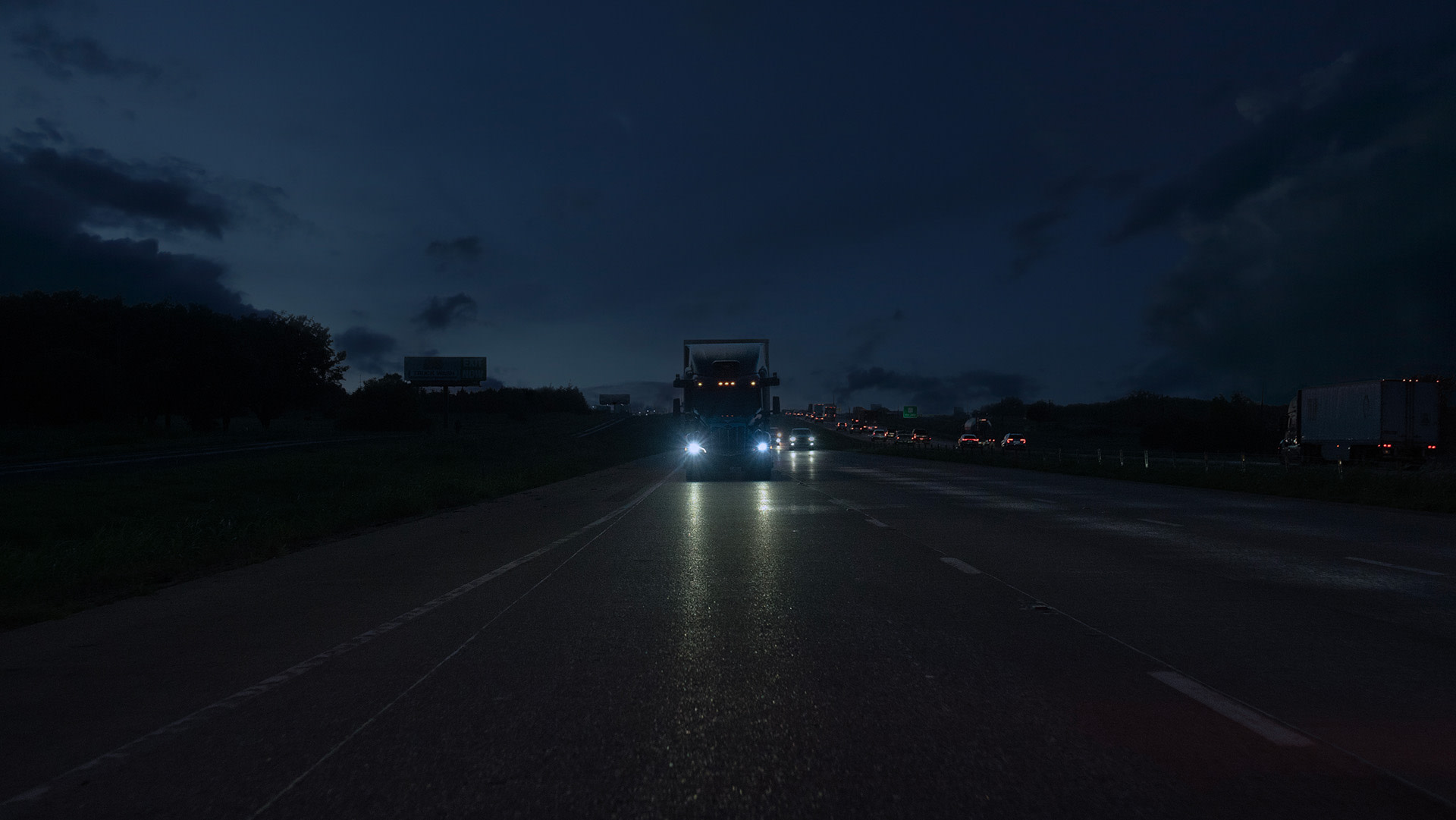
We’re also expanding the different types of trailers we can haul. Today, we’re carrying 53-foot dry vans, reefer trailers, and intermodal shipping containers, which allow customers to take advantage of the economic benefits of ship and rail combined with the speed and flexibility of trucking. In time, we’ll begin supporting additional trailer types.
As we expand the Aurora Driver with new capabilities and across longer lanes, customers will experience the advantages of uninterrupted freight movement — while raising the bar on safety for all road users.
Stay tuned — this is just the beginning.
This article was originally published by Aurora.