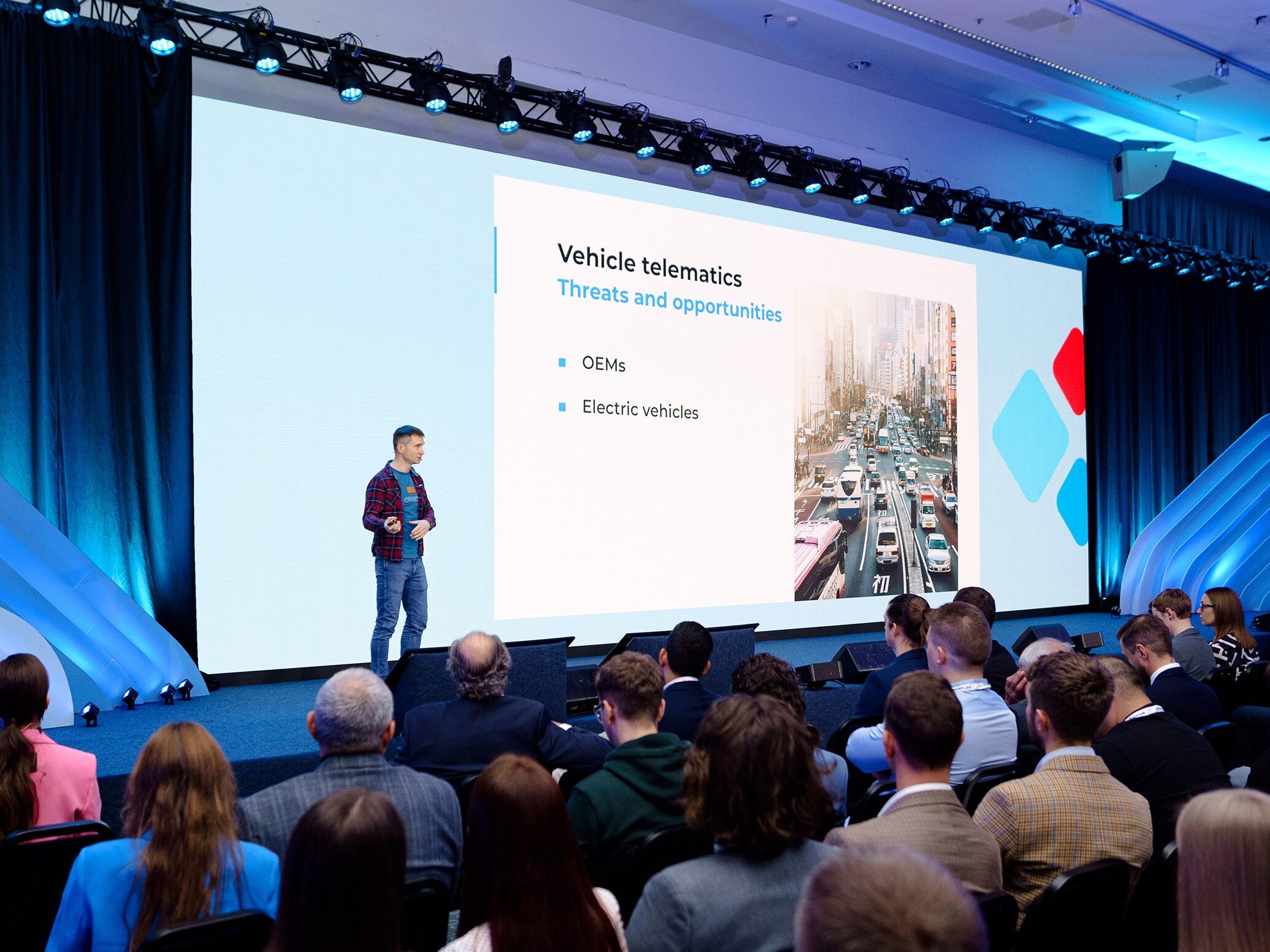
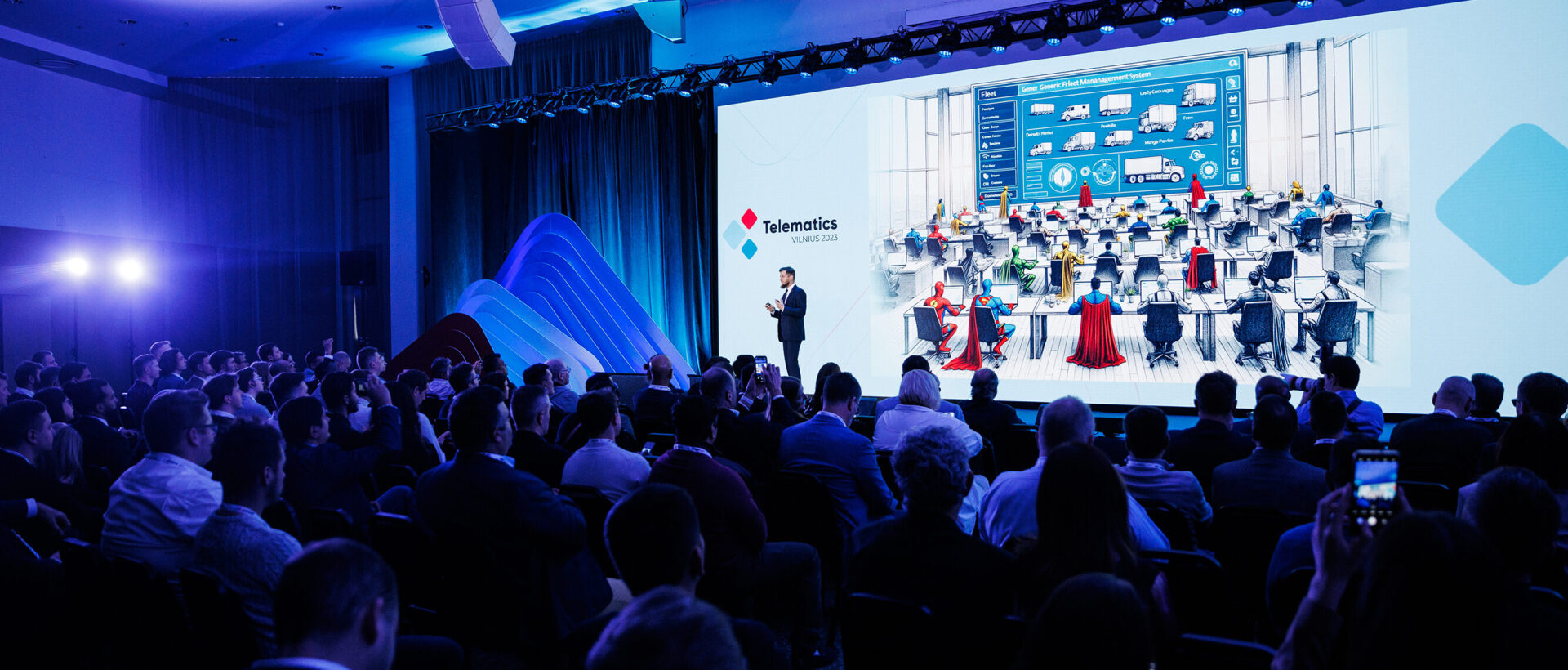
Discover what it was like at the Telematics and Connected Mobility conference — relive the atmosphere, insights, and ideas that drove the event.
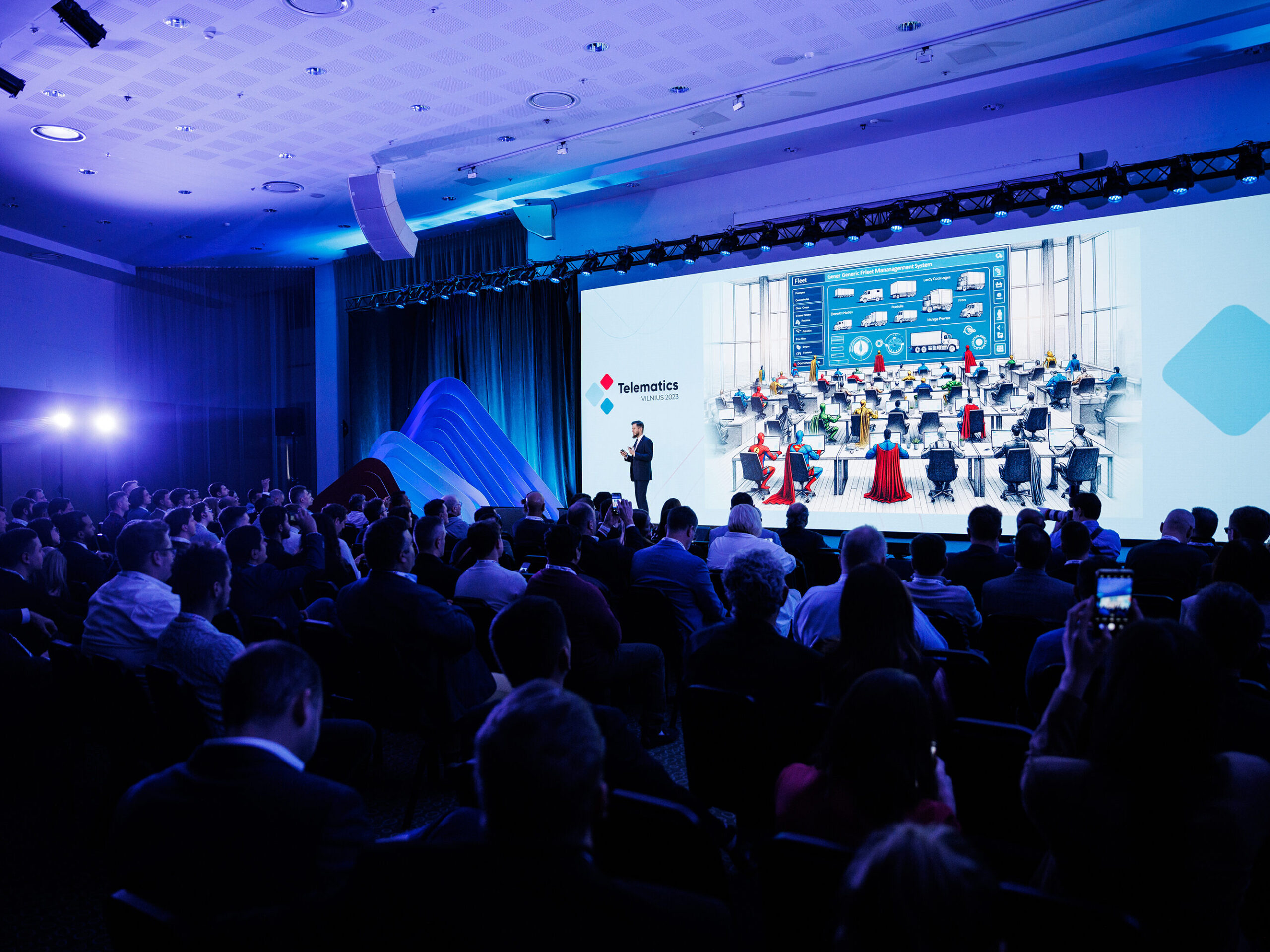
This autumn started strong with one of our most ambitious and exciting events yet. Months of preparation led to 2 days packed with discussions on fleet digitalization, featuring dozens of guest speakers, 2 parallel content tracks, a technology expo with 18 exhibitors, and hundreds of engaged industry professionals. This was the Telematics and Connected Mobility conference, hosted by Gurtam — the developer of Wialon — in Vilnius, Lithuania, in September.
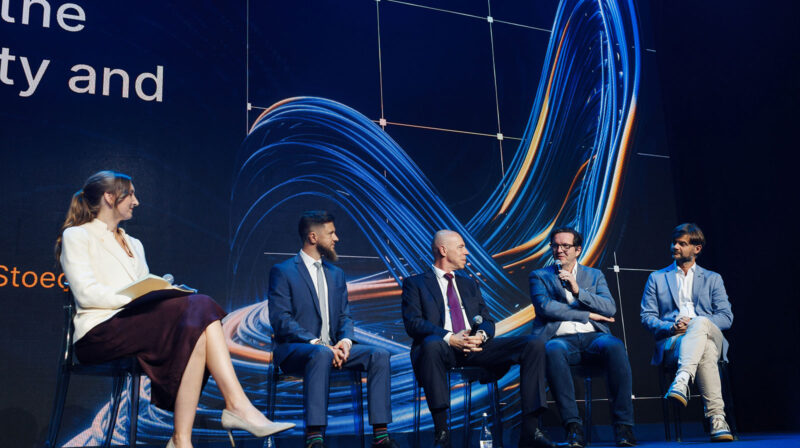
Here’s how it all went — read on for a detailed recap of Gurtam’s biggest industry event of the year. Make sure to stay with us until the end for an insight-packed review from Maryia Filimanchuk, Head of Wialon Innovation and Strategy Hub at Gurtam, who curated the business and industry strategy-focused content track.
Knowledge on full throttle
Beyond giving industry professionals a platform to share expertise and explore new opportunities, we also succeeded in preserving the warm, welcoming spirit of Gurtam events. At the same time, we expanded the scale — reaching a wider audience and uniting various segments of the telematics market under one roof.
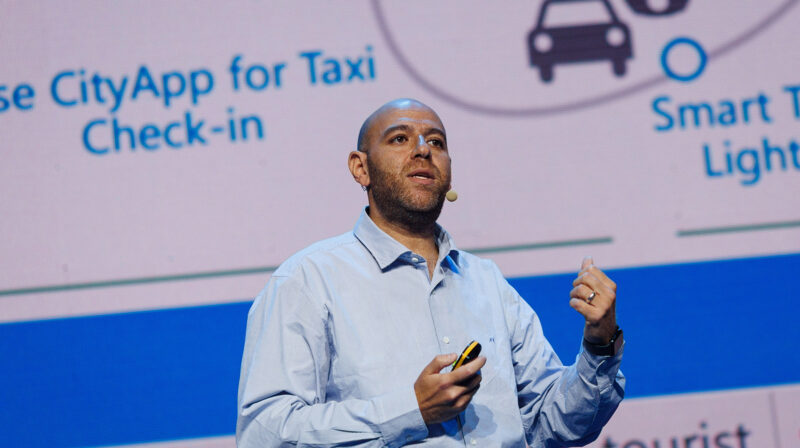
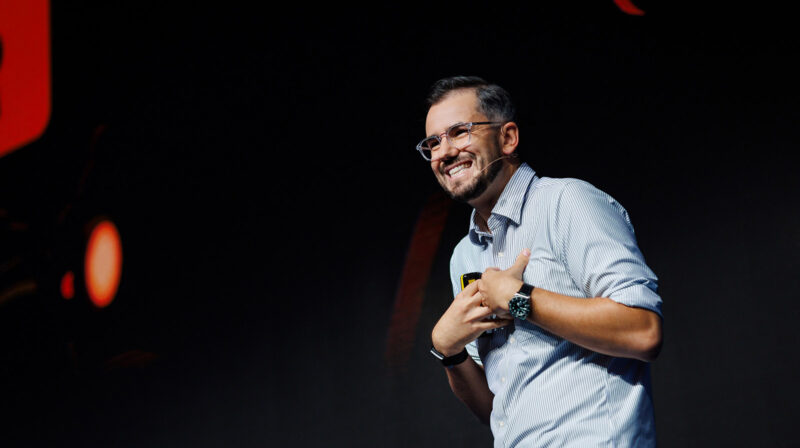
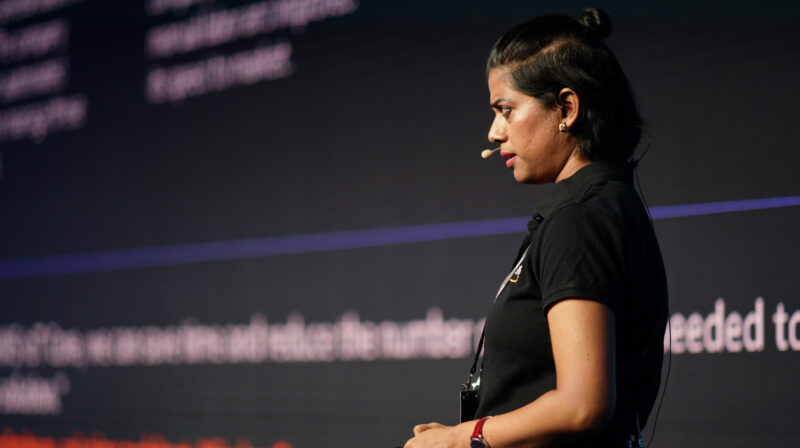
The conference featured 2 dedicated content tracks filled with presentations and panel discussions — “Business & Industry Strategy” and “Technology & Engineering Insights.” From early morning until late evening, both halls buzzed with energy, ideas, and expert conversations.
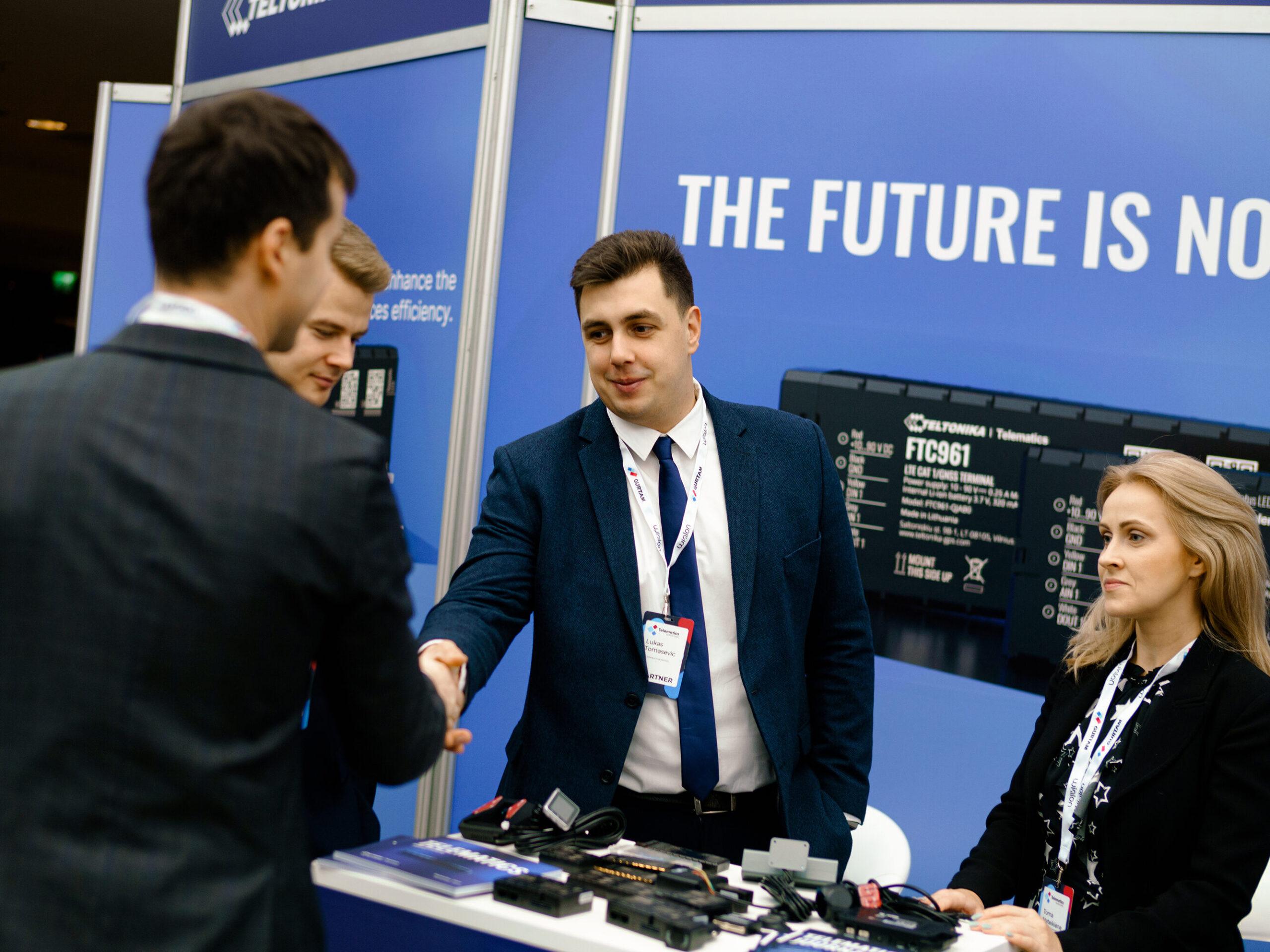
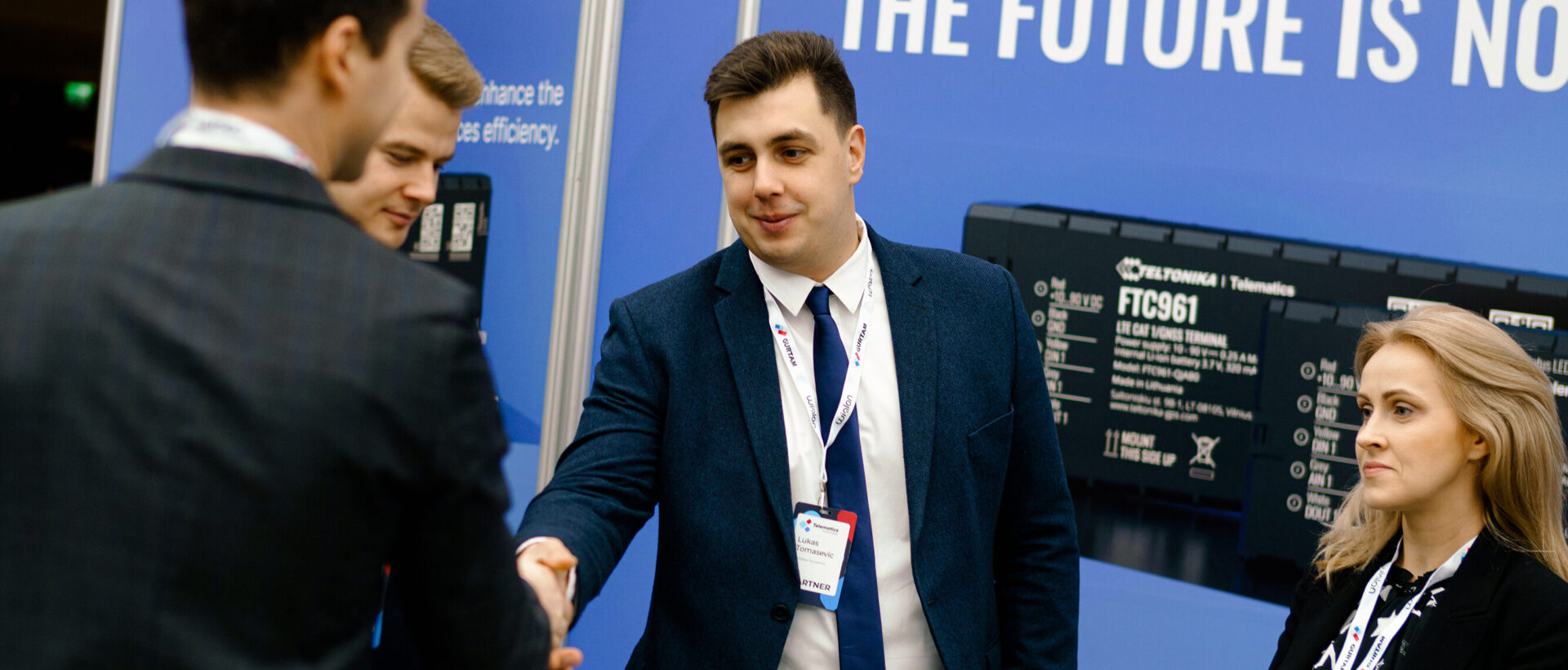
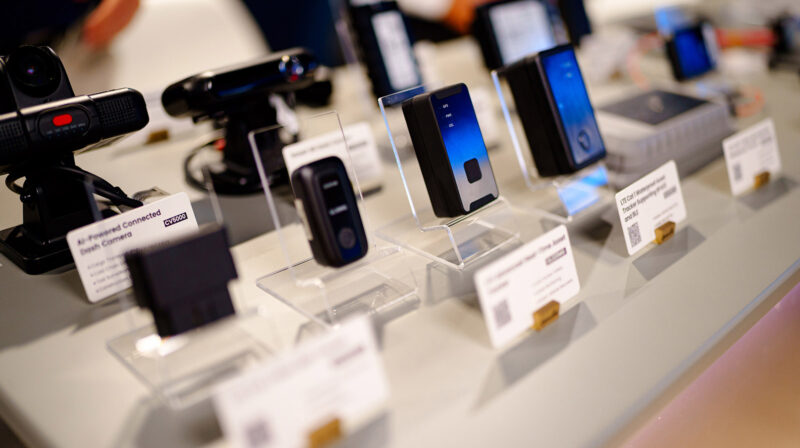
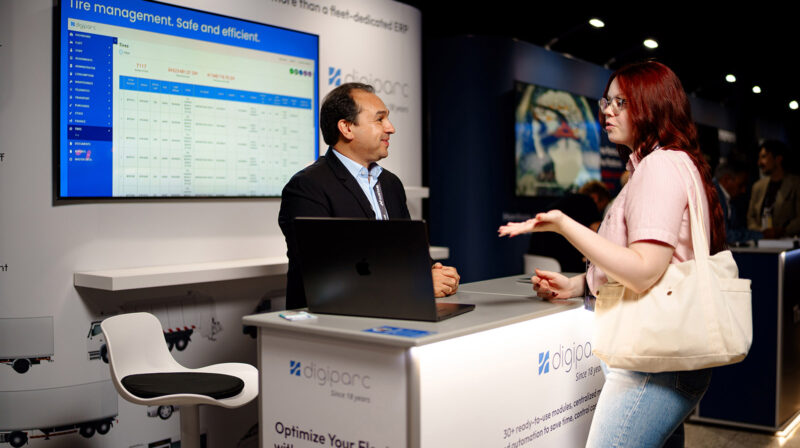
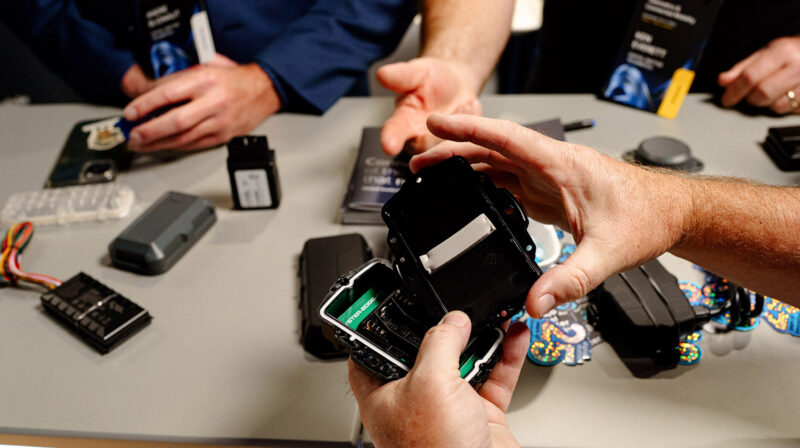
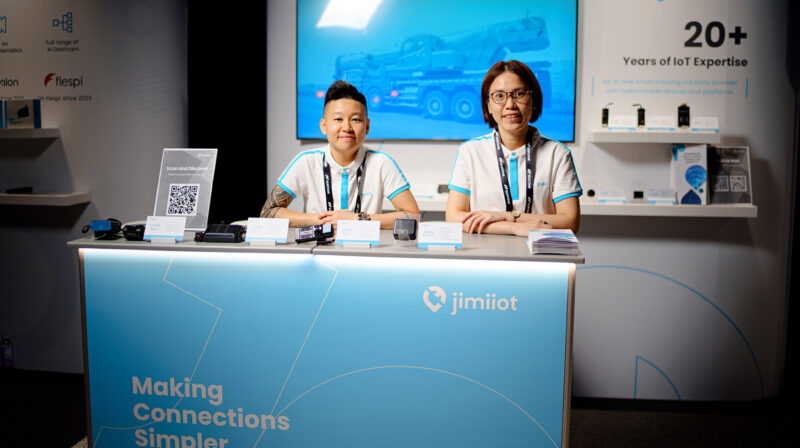
The tech expo, featuring 18 exhibitors, was another key part of the event. It brought together leading providers of hardware, connectivity, and software solutions, offering visitors a comprehensive look at the telematics ecosystem.
Exhibitors included:
- Howen Technologies
- Teltonika Telematics
- Digital Matter
- Ruptela
- Jimi IoT
- Queclink
- ST Sunlab
- TOPFLYtech
- Assistant Telematics
- emnify
- ERM Advanced Telematics
- ELA INNOVATION SA
- Xirgo Technologies
- Inventure Plc.
- Onomondo
- floLIVE
- Fleetguru OÜ
- Digiparc
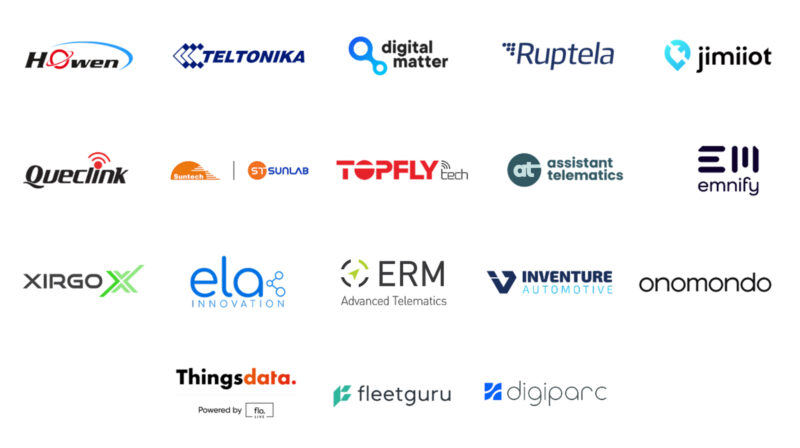
Together, these companies represented the full spectrum of telematics innovation from latest tracking hardware to advanced connectivity and MVDRs, giving visitors the opportunity to experience the products firsthand and engage directly with manufacturer teams.
A closer look inside the experience
Who better to share the conference story than someone deeply involved in shaping it? Maryia Filimanchuk was the mind behind the business and industry strategy-focused track, so she was in the middle of all the action. With a front-row seat to the discussions, Maryia gained plenty of insights and observations that she’s happy to share below.
Maryia Filimanchuk, Head of the Wialon Innovation and Strategy Hub, curator of the “Business & Industry Strategy” content track
Spending 2 days at Telematics and Connected Mobility, right in the center of key industry conversations, offered a clear view of how telematics data is reshaping and enabling other industries. Matthew Khouri, CEO of HMD, captured the essence of his keynote Death to the Dealer, Long Live the Trader with the tagline: “iron is a commodity, intelligence is the product”.
Fleets don’t care if a vehicle is yellow or orange — they care that it runs reliably, cost-effectively, and sustainably, and telematics data makes that possible.
The industry is evolving — it’s now about delivering complete, telematics-enabled services where data intelligence is part of the product itself. Christoph Köhler, Senior Manager at Porsche Consulting, illustrated this by connecting the future of leasing and car subscription models with the role of embedded data in driving them forward. His insights echo Matthew’s point about the growing importance of data-enabled business models. Lubor Lancos, Solution Consultant at Kapsch TrafficCom showed how next-generation tolling systems are built on the same principle.
In each case, telematics data isn’t the product itself but an enabler of more advanced services, empowering them to deliver greater value.
Such empowerment goes beyond commercial projects. According to Anders Bengtsson, Head of Innovation Hub North at EIT Urban Mobility, telematics data is becoming a public good, helping cities design more inclusive mobility for caregivers, older adults, and people with visual impairments.
The fleet management landscape remains complex and becomes more advanced: Mastering its navigation is a key to remaining competitive.
Let’s zoom in on the telematics data application Gurtam is renowned for – fleet management solutions. Numerous presentations and panel discussions from the conference tried to shed some light on this market, which made me realize that for many of its players, navigating today’s industry complexity feels like walking through a dark forest.
Telematics service providers (TSPs) and software providers often make decisions with limited, outdated, or fragmented data. Yet with telematics adoption still low across most regions, opportunities remain abundant — especially for solutions that deliver clear safety, security, and cost advantages backed by strong operational performance. As Andrew Jackson, Founder of PAVE Insight, emphasized in his session Perception vs Reality: The Actual Trends and Features of the European Fleet Telematics Market, many TSPs still rely on intuition rather than data. However, as the market consolidates and technology matures, competition is intensifying. At the same time, AI is reshaping the field completely — giving an edge not just to large players but to those that innovate and automate effectively. TSPs and software solution providers need to learn how to navigate the market in the long term, stand out from the competition, and adapt to increasing complexity.
The perception and expectations of fleet digitalization are evolving, fueling the market advancement. I loved the waste management case study by Moaad El Aboudi, CEO of Insight Solutions. What started as a simple tracking became a fully digitalized service tailored to the core business needs, showcasing specific measurable results, from cleaned streets to saved budgets. A similar kind of full solution that Aliaksandr Kuushynau, the Head of Wialon, was describing in his presentation.
The competitive landscape remains complex and diverse, spanning broad fleet management platforms and niche, industry-specific solutions such as the aforementioned waste management. The panel Fleet Management Solutions Driving a More Sustainable Future highlighted how products sharing the same market often speak different languages, each resonating with its own audience. With blurred borders between fleet management, asset tracking, and other applications, the market’s richness is unmistakable.
The Navigating OEM and Aftermarket Data panel was a brilliant highlight of the conference: success lies not in rivalry but in coexistence. TSPs that combine OEM and aftermarket data for the relevant regions and use cases, rather than fighting over data ownership, should be able to stand out and win. In this evolving market, competition and integration increasingly go hand in hand.
The evolving future of the automotive market
As we focus on fleet solutions, understanding where the automotive industry is heading is essential. A lot is happening here, including the EV adoption slowdown in certain countries due to funding project rollbacks, manufacturers redefining how consumers see cars with a software-defined vehicle approach, and new EV brands diversifying the pool of OEM data. These topics were explored in detail in the presentation Digital Transformation Reimagining Mobility: Product, Business, and Everything In-Between, delivered by Partha Goswami, Principal at PG Mobility Analysis LLC.
Autonomous vehicles are already operating in mines, while tests of autonomous taxis are being rolled out across the US and Europe. However, widespread adoption still remains distant. Despite rapid innovation, Europe’s median fleet age continues to rise — from 8.2 years in 2008 to a projected 12.1 years by 2030 — showing the gap between vision and reality.
Regulation, security, and the fragile side of innovation
While data certainly empowers industries and businesses, it’s also a liability. Regulations and data security will shape market progress as much as technology itself. And it’s up to every business to either unlock the growth with a given regulation or experience headwinds due to it.
The What’s Next for Mobility panel explored how regulation, infrastructure, and innovation intersect. The session by Karim ElDessouky, Digital Solutions & Products Manager at ZainTECH stood out, showing how IoT data extends beyond mobility into sectors such as healthcare and tourism, and offering practical insights on working with government stakeholders.
The Telematics and Connected Mobility conference has closed its doors, but its echoes continue. The ideas exchanged, insights shared, and products unveiled are now transforming into new opportunities — and we’re ready to move forward on this road together.
Such events remind us how powerful shared experience can be. They unite experts, partners, and innovators, creating space for learning, collaboration, and fresh thinking — giving participants the tools and connections to shape what comes next in telematics.
This article was originally written by Gurtam.