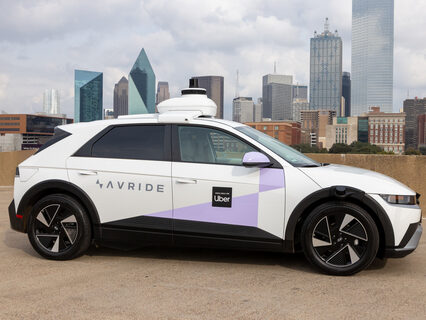
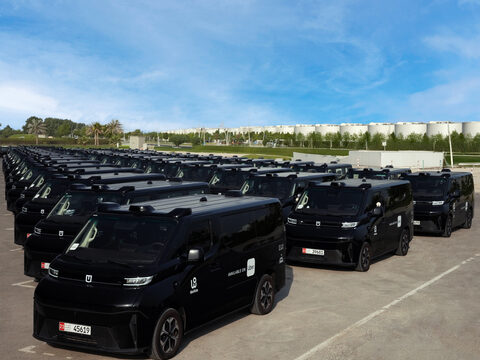
Uber Technologies and NVIDIA have announced an expansion of their partnership in autonomous vehicles, with plans to deploy a fleet of software-driven Level 4 (L4) robotaxis across 28 cities worldwide by 2028.
The rollout is expected to begin in Los Angeles and San Francisco in the first half of 2027. The initiative will combine NVIDIA’s autonomous driving software with Uber’s ride-hailing platform, alongside contributions from a range of automotive manufacturers.

At the centre of the programme is NVIDIA’s DRIVE Hyperion platform, supported by its Alpamayo artificial intelligence model. The system is designed to manage complex and less predictable driving situations, such as roadworks or unusual pedestrian movement, using advanced reasoning techniques.
Uber’s CEO, Dara Khosrowshahi, said:Autonomous technology holds enormous promise to make transportation safer, more reliable, and more accessible. By expanding our partnership with NVIDIA and combining advanced AI with Uber’s global network and operating experience, we are laying the foundation for an increasingly multi-player AV world, ensuring broad commercialisation and helping to bring robotaxi service to more riders over time.
The companies plan to introduce the service in stages. Initial phases will involve vehicles collecting data to refine the system’s performance in specific cities. This will be followed by supervised operations before transitioning to fully driverless L4 services.
The expansion is intended to cover cities across North America, Europe, Australia and Asia, with deployment continuing through to 2028.
NVIDIA’s founder and chief executive, Jensen Huang said:The ‘ChatGPT moment’ for physical AI has arrived—robotic systems can now reason about the complexities of the physical world. Uber is building one of the world’s most expansive autonomous ride-hailing platforms. We are delighted to connect NVIDIA’s large ecosystem of robotaxi-ready partners to the Uber network to bring the magic of robotaxis to cities worldwide.